


The AJ is delighted to introduce the second edition of Working Details [published in print 18 December], following the success of last year’s volume, and marking the continuing revival of a series first published by the AJ in 1953. While maintaining the same aesthetic spirit that defined 2024’s volume, the new book adopts a clearer structure and more focused lens.
Organised into three material sections – brick, stone and timber – the second edition brings together 20 projects selected from AJ Specification published over the past decade. The projects represent a broad range of typologies, scales and contexts from across the UK, chosen not for stylistic effect but for the clarity, ingenuity and relevance of their technical resolution.
The print version (single issues can be bought here) contains 104 carefully annotated drawings. Each set of details is accompanied by project data and concise descriptive texts, offering insight into how contemporary architects are working with material, structure and craft. Taken together, the projects form a comparative study of approaches to construction, demonstrating both innovative techniques and the refinement of well-established methods.
As with previous editions of Working Details, the intention is not simply to document how buildings are made, but to contribute to a wider conversation about architectural detailing: its methods, its meanings and its capacity to shape the experience of built form.
Corner House by 31/44 Architects
Pale grey waterstruck brick
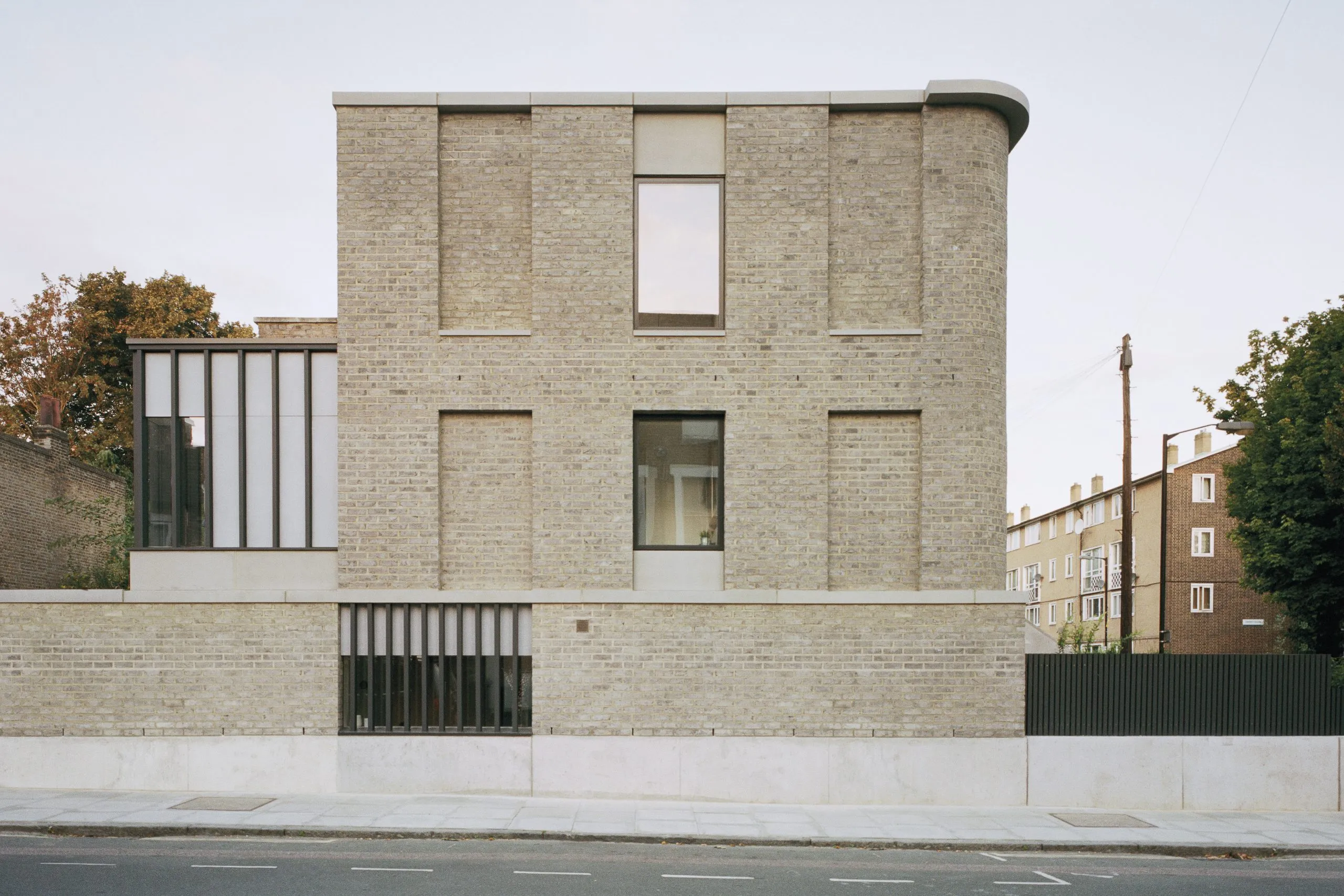
Photo: Rory Gardiner
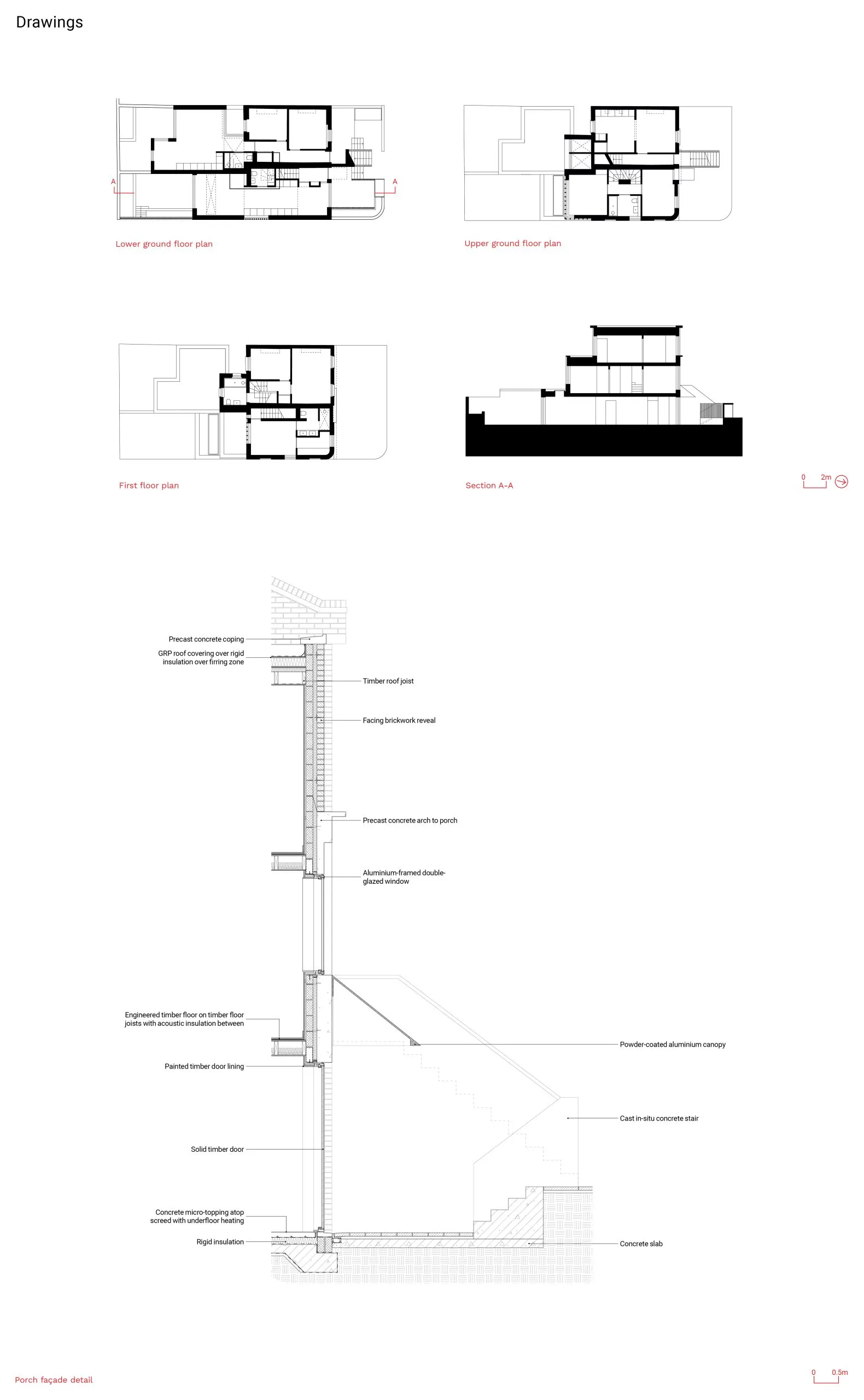
31/44 Architects remodelled an existing house in south London, extending it to create two separate two-bed apartments and an attached new-build house in the side garden to complete the terrace.
Following the pattern of the existing terrace, typological elements of the adjacent houses were reinserted to repair the existing out-of-pattern arrangement and lessen the impact of stepping out beyond the building line.
The cornice line was continued across the new dwelling but then broken and stepped to provide clear articulation between them. The new dwelling is entered at lower level, while the upper ground door has become a window. The canopy sheltering the door beneath appears as part of the stair.
The side elevation was designed to be deliberately characterful. A curved corner was used to make the house appear thinner, referencing an old pub across the street. A combination of blind and real windows produces a façade that balances both historic and contemporary architecture.
A pale grey waterstruck brick was chosen for its texture and colour, complementing the worn stock brick of the adjacent terrace. The mortar matches this and is pointed flush to create one cohesive surface and emphasise the curved corner. The brick is articulated by precast concrete elements – copings, sills and panels – in a paler grey and acid-etched.
To the rear is a first-floor conservatory built of timber and glass, painted black to contrast with the paler body of the building. Read more here
Location: Peckham, London | Completion: August 2019 | Gross internal floor area: 239m2 | Structural engineer: David Salter Associates | Main contractor: Martin’s Builders | AJ Specification issue: December 2019 (Brick and Stone)
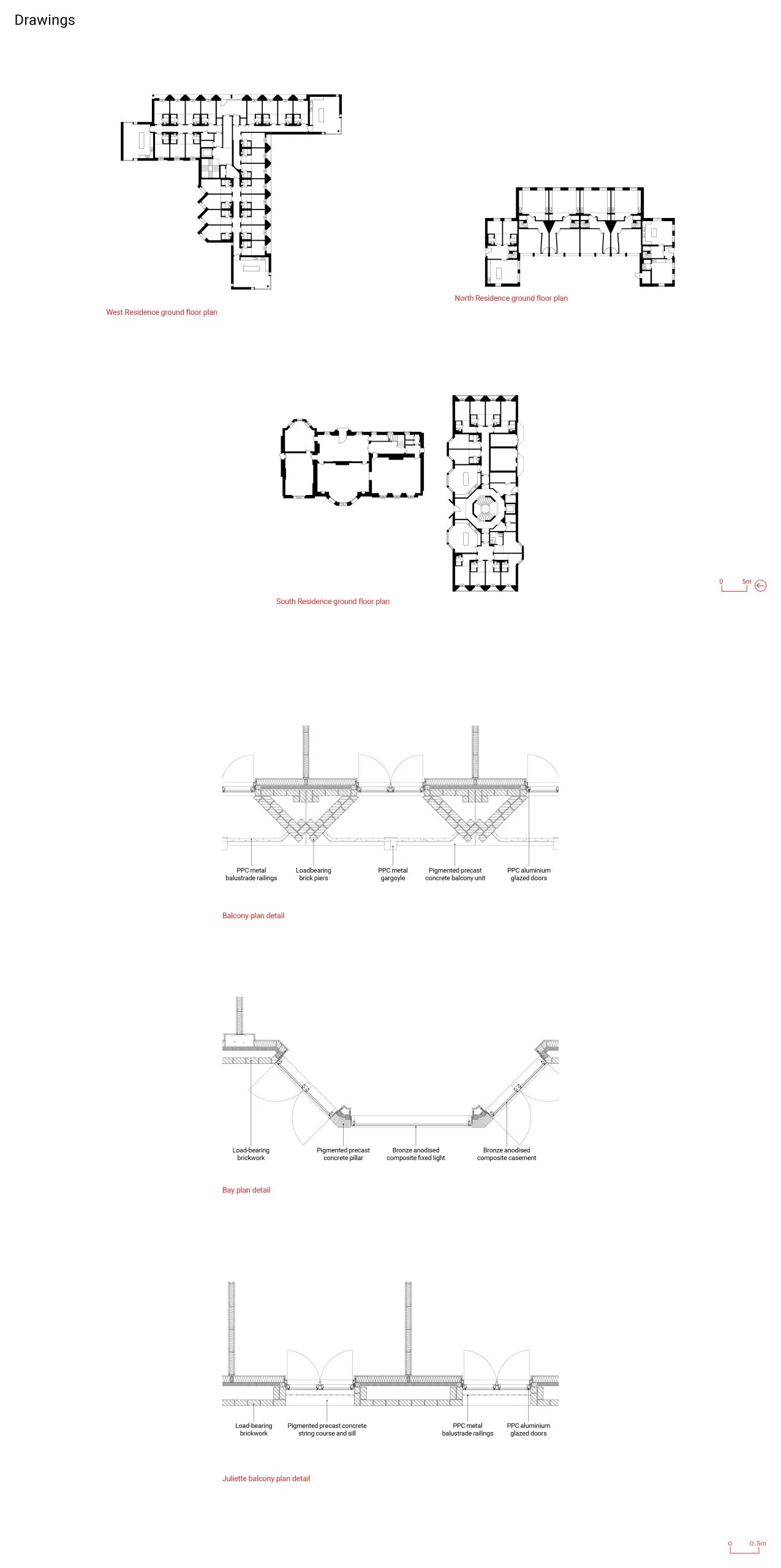
Chadwick Hall by Henley Halebrown
Brick piers and fenestration
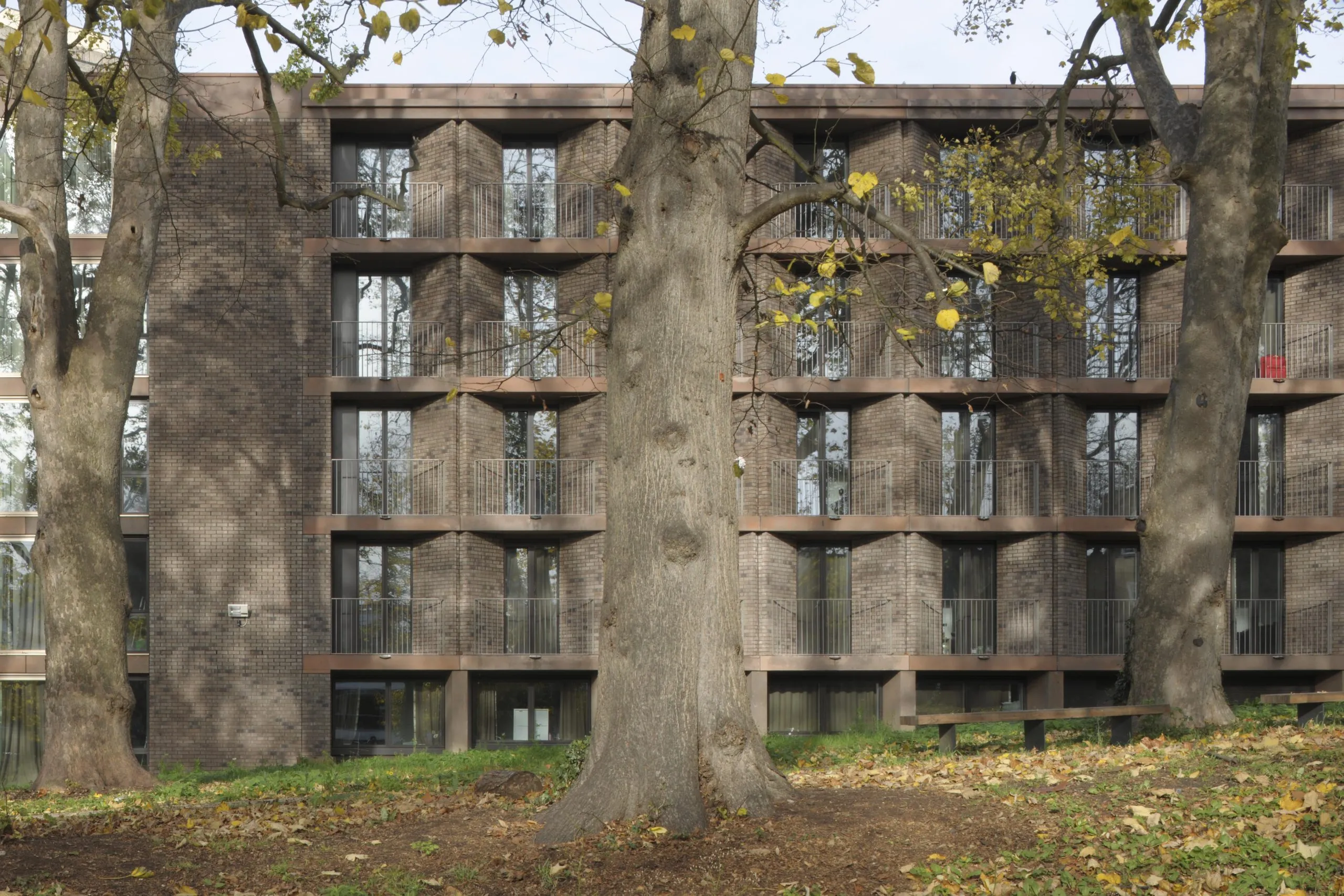
Photo: David Grandorge
Completed for £12.6 million in 2017, this project provided 210 ensuite student bedrooms for Roehampton University. It is set in the gardens of the Grade II*-listed Devonshire House, a Georgian villa which also borders London County Council’s renowned and listed Modernist Alton West Estate.
Informed by this context, the 2018 Stirling Prize-shortlisted accommodation was designed across three buildings – North, West and South residences – each employing a distinct plan type. Two of the buildings are villas, while the third is a Modernist pinwheel. Two were paired with an existing sunken garden on the site of a long-demolished villa designed by John Soane. The third is on an axis with the garden to the south of Devonshire House.
Inside, the rooms were clustered into apartments or terraces for groups of six to twelve students. Shared living spaces, depending on type, were arranged around entrances.
Through material and composition, the three residences were designed to pay homage to both the Georgian and post-war architecture nearby. Their brick and precast elevational treatments, with generous fenestration, aimed to enforce a sense of permanence and weight. Broken, arrowhead-like bricks piers were used to form recessed, half-hexagonal balconies. Henley Halebrown worked with manufacturer Floren to develop a bespoke brick mix for the project.
Concrete-framed structures were encased inside freestanding, load-bearing masonry walls. The interiors were wrapped in heavy, deep walls, incorporating a balcony for each room – intentionally theatre-like to mediate between the landscape and private realm of each room. Read more here
Location: London SW15 | Completion: 2017 | Gross internal floor area: 6,365m2 | Structural engineers: Buro Happold, Campbell Reith | Main contractor: Morgan Sindall | AJ Specification issue: November 2017 (Brick and Stone)
Riverview House by Mole Architects
Hit-and-miss screening
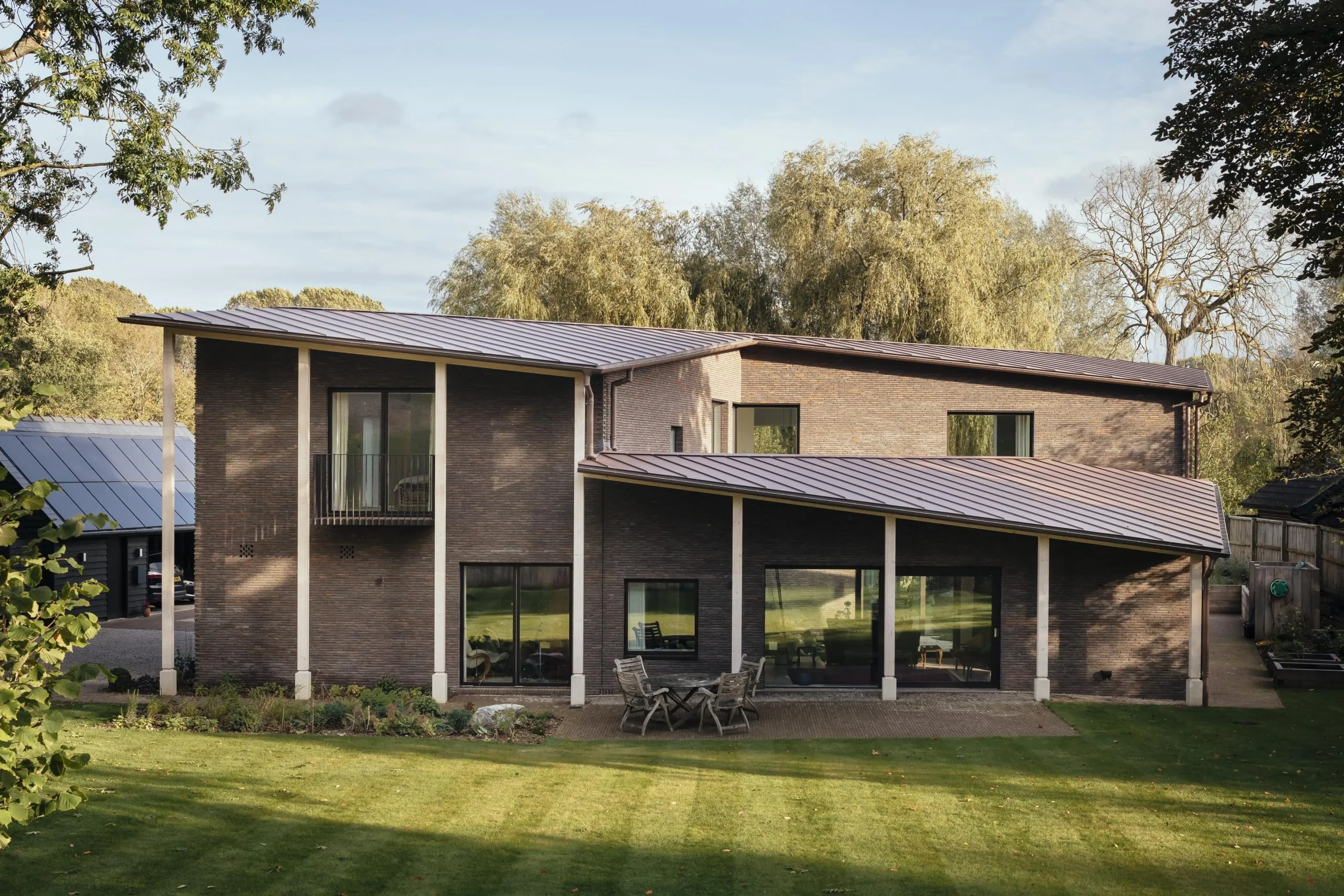
Photo: Jim Stephenson
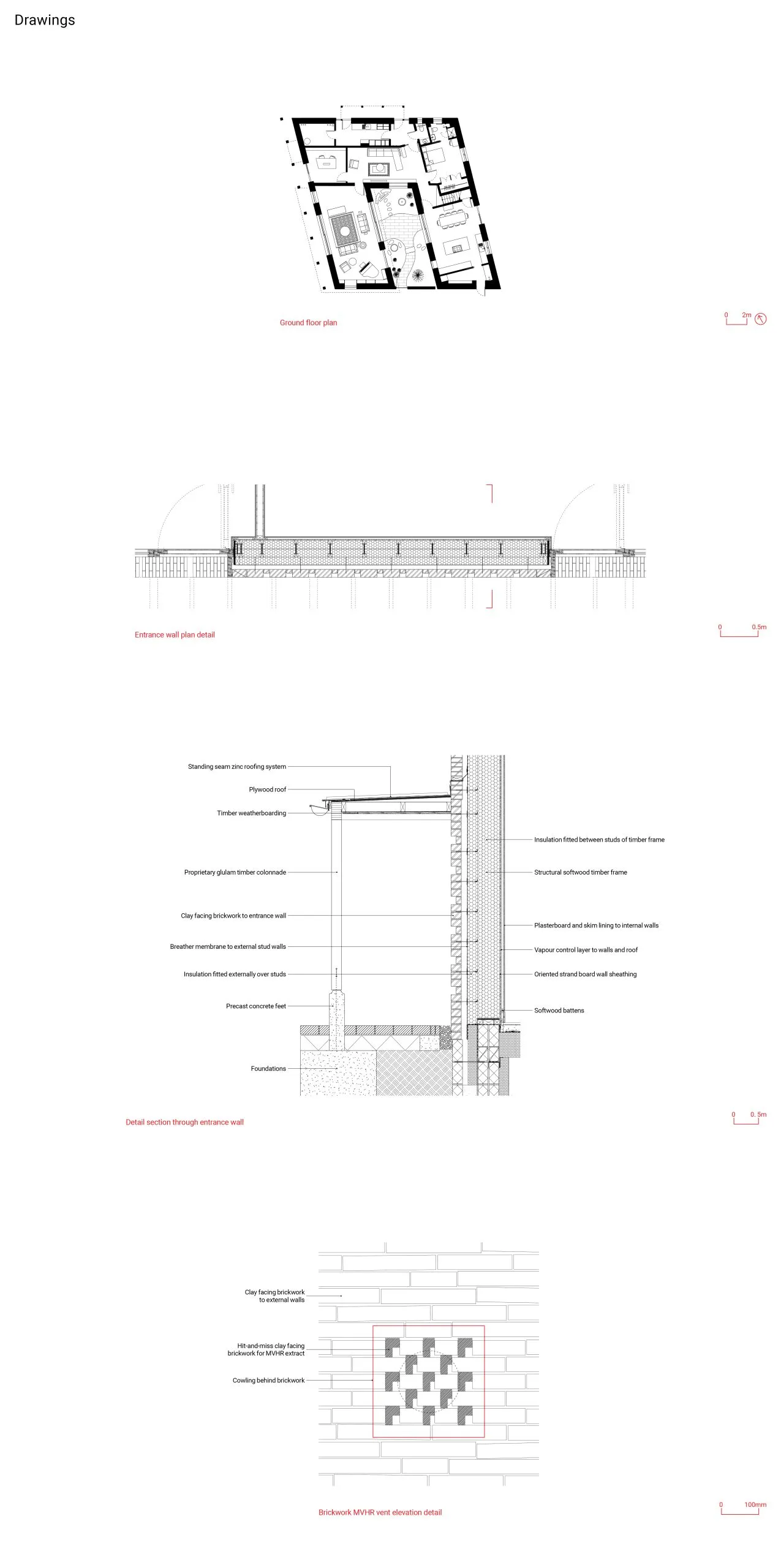
A British-Indian client commissioned Mole Architects for this new-build house on the River Cam after searching for a new house for several years. They wanted a home that would be energy efficient nd intergenerational – recalling the clients’ grandparents’ houses in India.
The large two-storey volume is wrapped around the east and north sides of a single-storey wing and features an open courtyard to achieve sightlines and maximise natural light.
Early designs were tested using PPHP Passivhaus software to reduce energy consumption. The house was constructed with a highly insulated timber frame and high degree of airtightness. Partly inspired by the Mill House and barns adjacent to the site, the external appearance was formed out of dark Flemish brickwork. This was in a similar dimension to the Georgian brickwork of the neighbouring Grade II-listed mill. The client accompanied the project architect to Belgium to visit buildings using the specific brick. Breaking up the brick skin are light-stained timber and brick details that hark back to those found in Indian buildings and brickwork details found in farm buildings at nearby Audley End Estate.
Where vents such as block and beam cavities and MVHR services penetrate the walls, the practice chose to use hit-and-miss brickwork with a plenum behind. The holes were protected with mesh to limit insect ingress – another detail like the barns at Audley End.
Hit-and-miss brickwork details are also found adjacent to the entrance and provide a screen to the courtyard, inspired by the work of Laurie Baker, the late British-born Indian architect. Read more here
Location: Riverview, Essex | Completion: April 2021 | Gross internal floor area: 320m2 | Structural engineer: Conisbee | Main contractor: Adams and Newman | AJ Specification issue: April 2023 (Brick and Stone)
Golders Green Crematorium by MortonScarr Architects
Geometric motifs
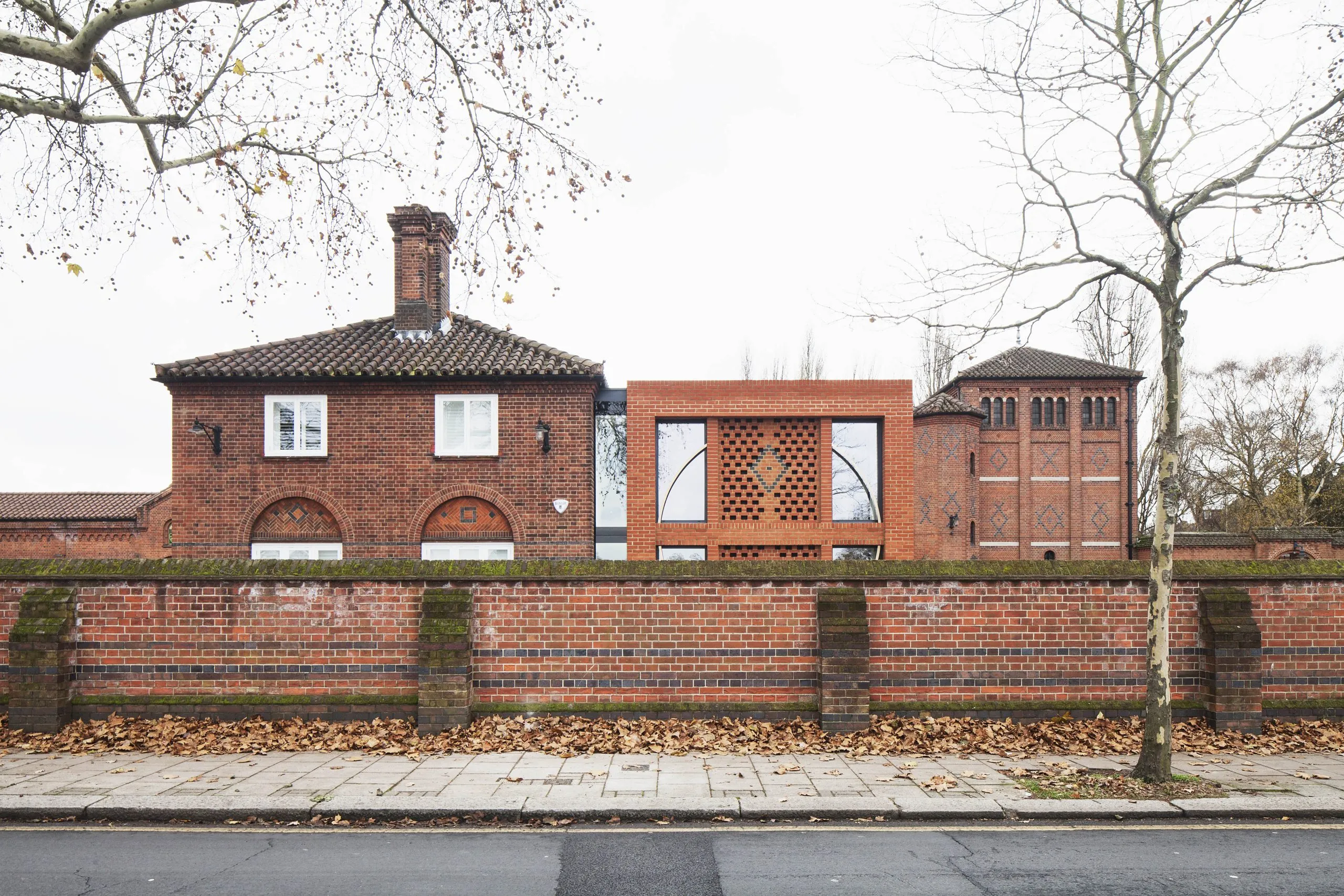
Photo: James French
The London Cremation Company commissioned MortonScarr Architects to lead the extension and refurbishment of its two-storey office building to provide its corporate home along with space for the Golders Green Crematorium management team. The Grade II-listed 1912 building was one of the first crematoriums to be built in England.
Taking inspiration from the surrounding buildings, MortonScarr designed a two-storey extension to complement a remodel, accommodating new reception space, offices, meeting rooms and ancillary WC, storage and kitchenette. The extension has a flat roof and is connected to the existing structure via frameless glazing.
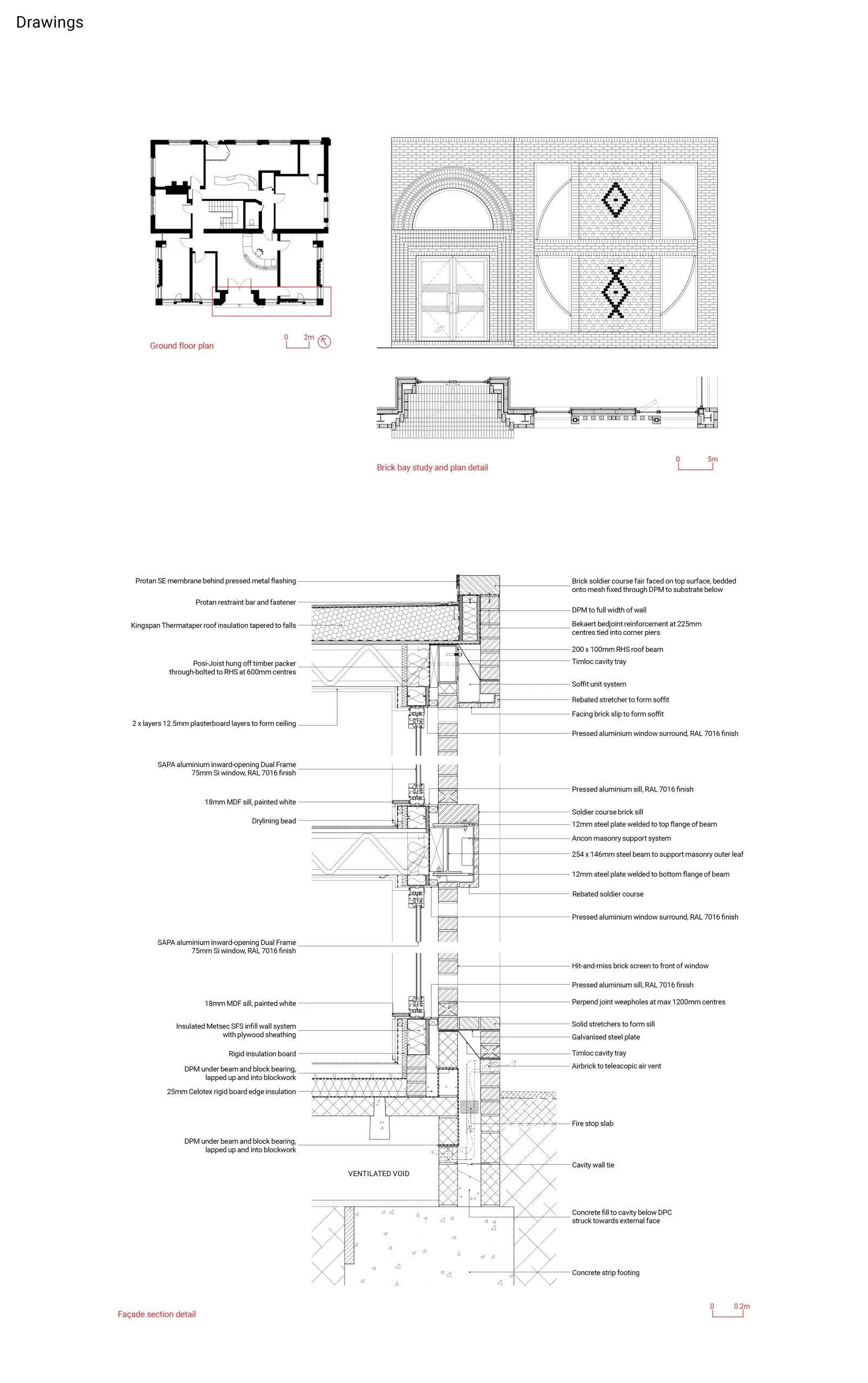
Its elevation features a composition of solid and lattice brickwork as a contemporary take on the craftmanship of the original structures, while referencing geometric symbology. Motifs found on the site were also replicated on the façade, using contrasting Ibstock Parham Red and Staffordshire Blue bricks.
These were installed through a mixture of hand-laying and prefabricated panels, with a masonry support system used for the brick soffits and corbelled details. Brushed brass rings were set within the window openings to add an accent to the brickwork and complete the geometry of the arches found throughout the site.
Hit-and-miss brick screening was used to create a sense of lightness, while reducing solar gain to the full-height opening sections of glazing behind, which provide ventilation. Read more here
Location: London NW11 | Completion: January 2020 | Gross internal floor area: 387m2 | Structural engineer: HOP Consulting | Main contractor: Hale | AJ Specification issue: April 2022 (Brick and Stone)
St Albans Cathedral by Simpson & Brown Architects
Bespoke clay bricks and limestone
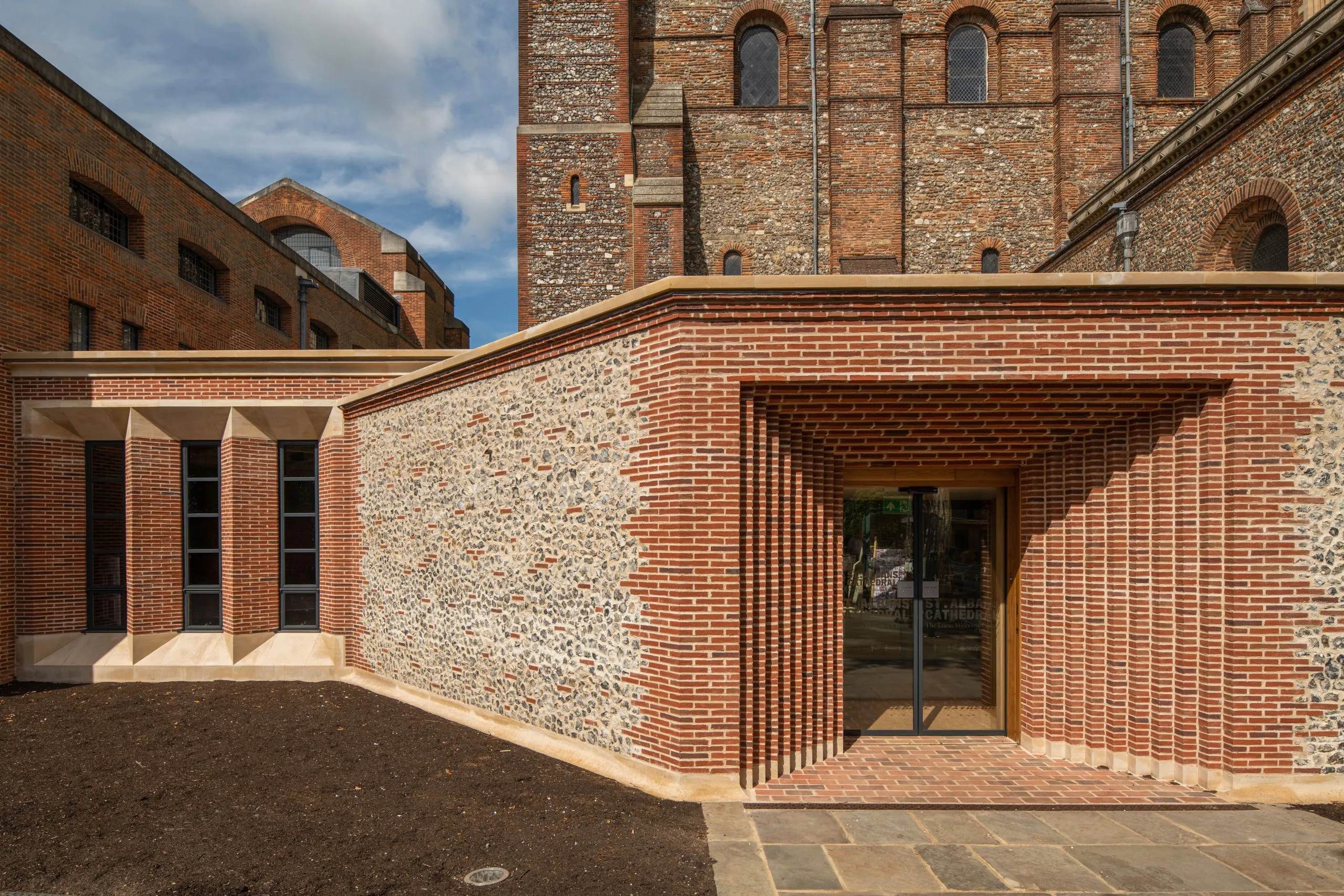
Photo: Giles Rocholl
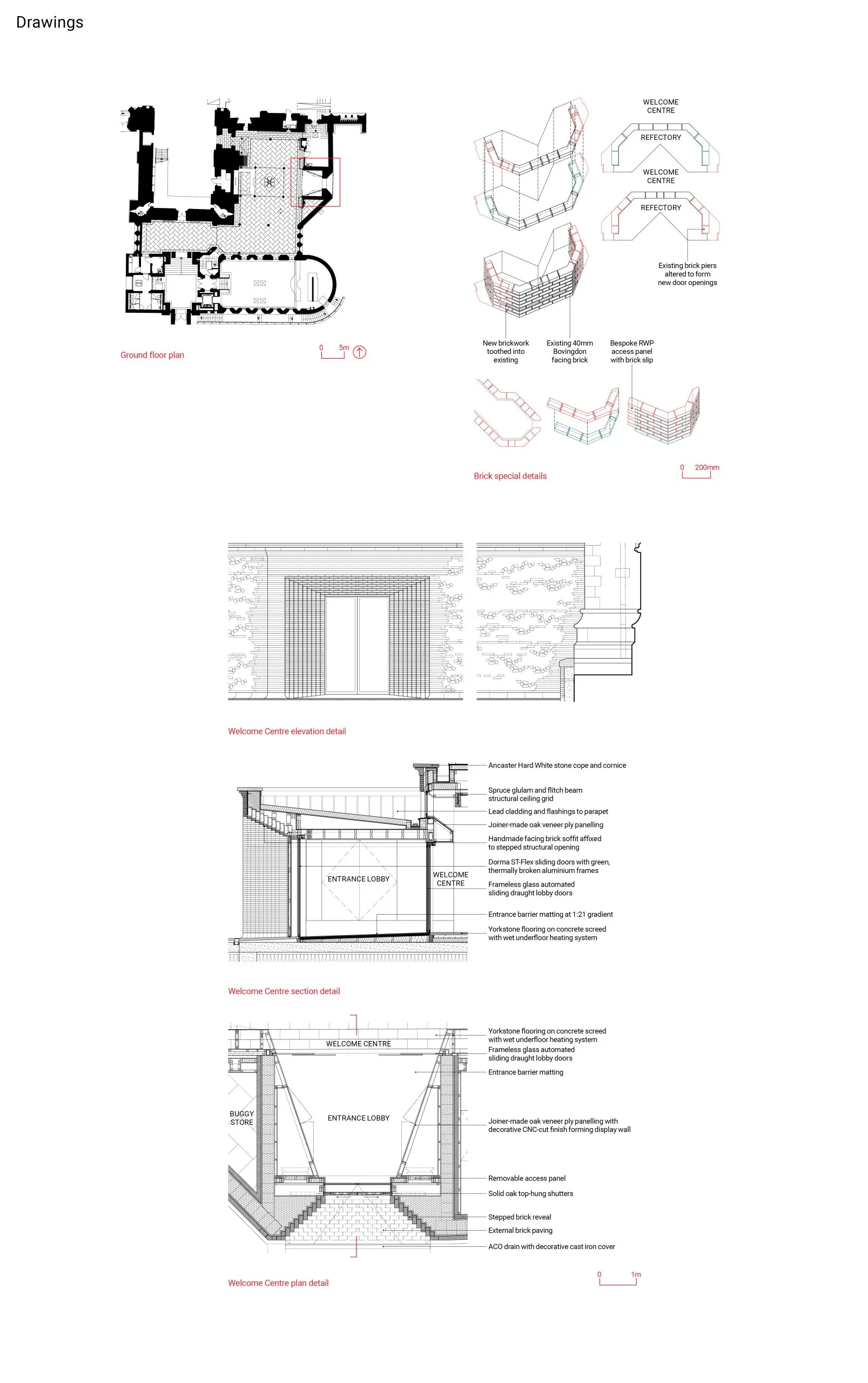
Through National Lottery Heritage funding, this £4.1 million project set out to connect the Grade I-listed cathedral to its 1980s Chapter House building with a new welcome and learning centre. It was part of the wider Alban, Britain’s First Saint: Telling the Whole Story project.
The centre was designed to provide much-needed additional accommodation and upgraded facilities to support the varying needs of the cathedral’s congregation, education groups, visitors and staff.
Set in an archaeologically sensitive site in Sumpter Yard, the building provides a visitor entrance and reception, retail space, interpretation and exhibition areas and a relocated vestry. It also creates level access between the main cathedral and Chapter House, which was also extensively remodelled.
The new entrance elevation was designed as a low-slung garden wall, paying homage to a former monk’s graveyard wall that once bounded the site. Previously concealed historic fabric was also restored and left exposed.
Natural materials, such as oak and spruce, have been used internally to complement the existing. Research was conducted in the cathedral’s archives to determine suitable stone, flint and brick specifications for all new building elements and repairs to existing fabric. The original Bovingdon bricks of the Chapter House were carefully matched in size, texture, colour, ratio and distribution.
Flint nodules, salvaged from the preparatory works, were used alongside snapped field flint and bespoke clay bricks. These were laid in courses over breathable lime render and self-insulating clay Thermoplan blocks. Ancaster Hard White limestone, used for previous cathedral repairs, was sourced for dressed stonework, while Yorkstone flags were used for flooring in the centre and slype. Read more here
Location: St Albans | Completion: June 2019 | Gross internal floor area: 1,436m2 | Structural engineer: Momentum | Main contractor: Thomas Sinden | AJ Specification issue: December 2019 (Brick and Stone)
Hans Place by Squire & Partners
Digitally developed brickwork
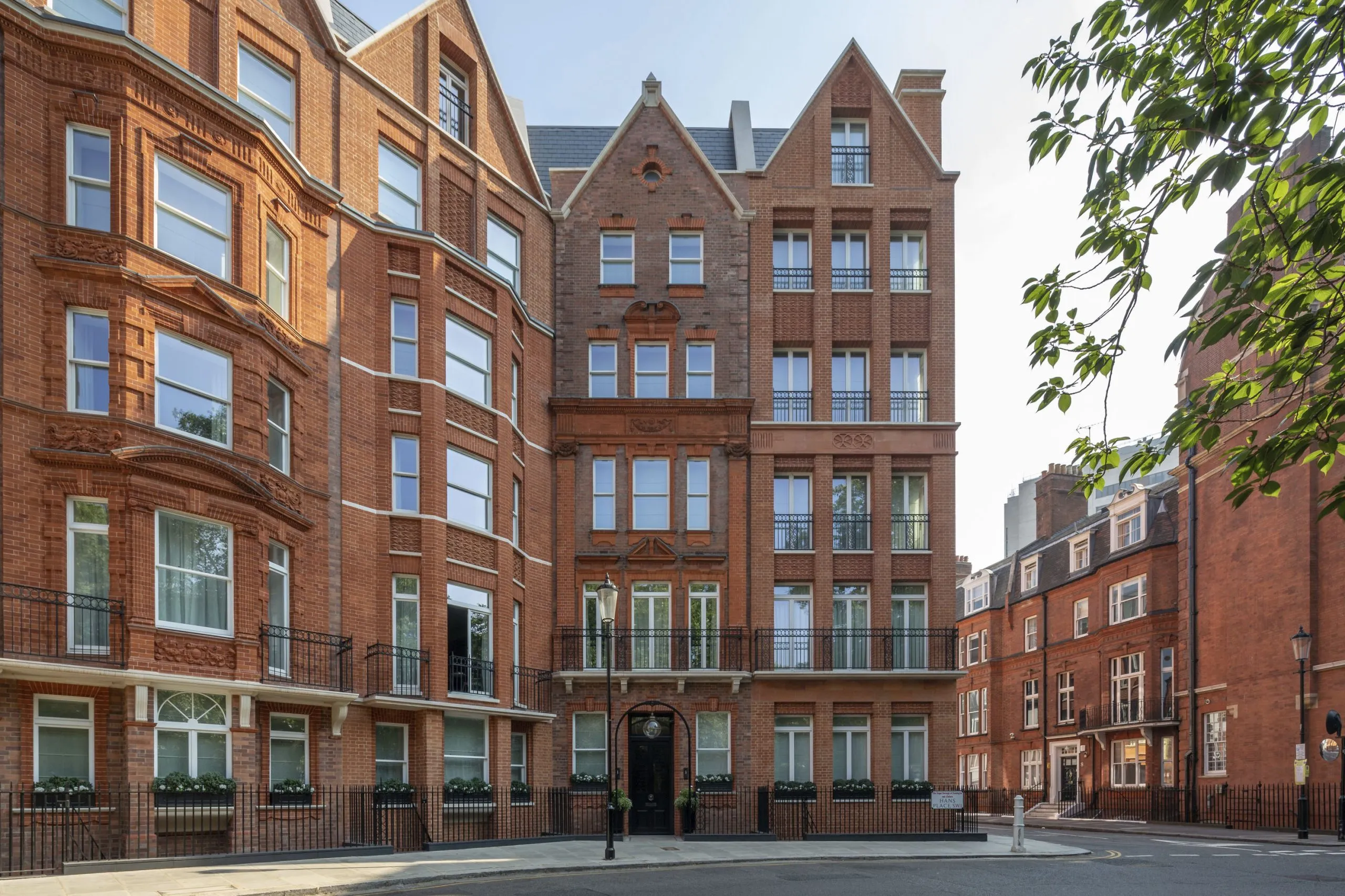
Photo: James Jones
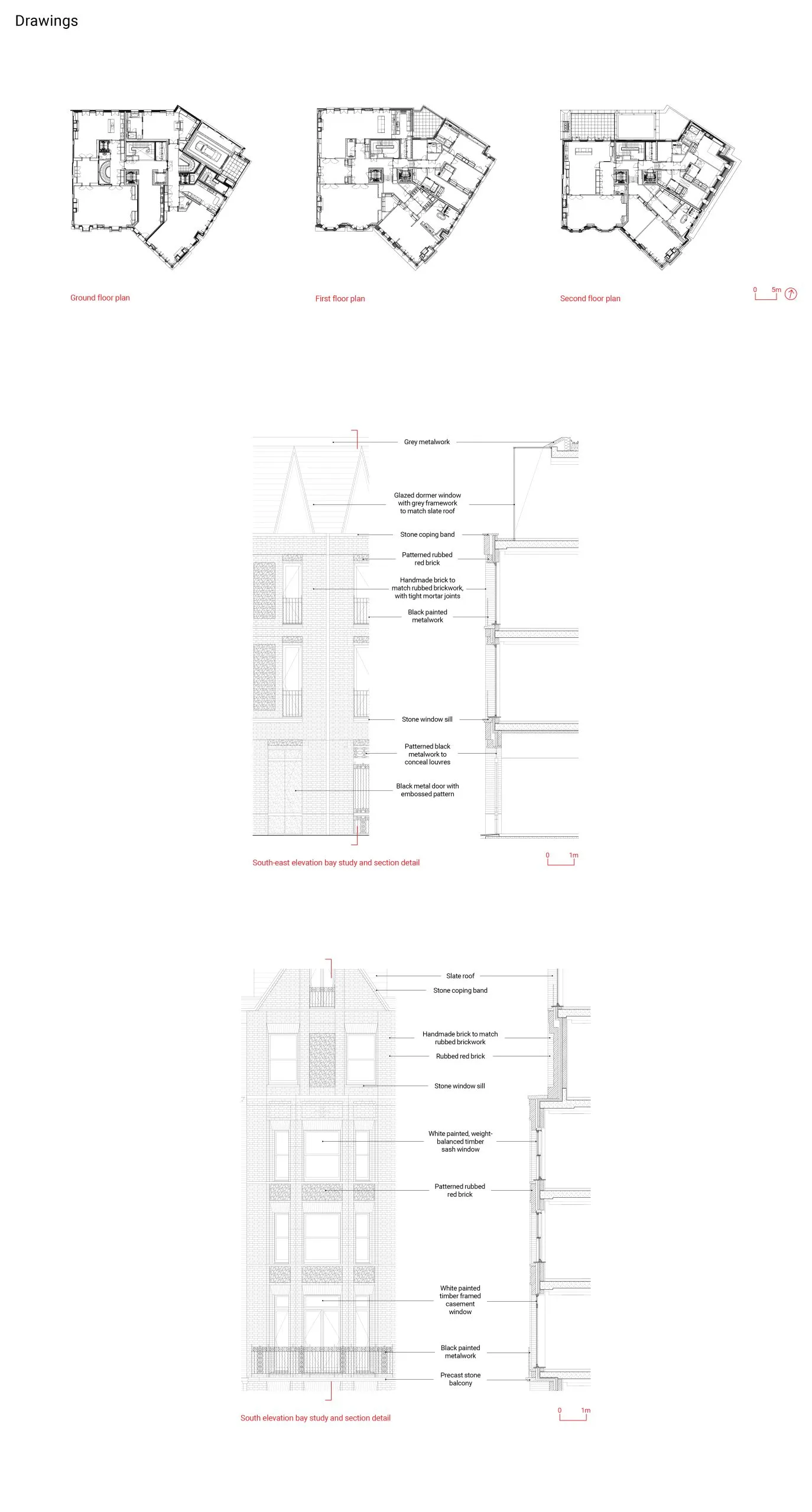
Squire & Partners designed this development of 10 apartments to span the façades of four 19th-century terraced townhouses, on the corner of Hans Place and Herbert Crescent in Knightsbridge, central London. The practice sought to sensitively repair or replace the existing façades to create a crafted response to its conservation-area setting.
Open-plan apartments are arranged over seven storeys including two lower-ground levels, behind the traditional façades.
The houses responded to the historic grain of the garden square and took inspiration from the Dutch revival buildings that defined the area – built in richly detailed rose red brick and featuring carvings inspired by nature.
Two of the townhouse façades were retained while three were new insertions. The practice proposed incorporating a bespoke brick with elements of the façades – above and below window lintels and spandrels, and on the flank wall of a prominent chimney to the corner of Hans Place. This bespoke brickwork, digitally developed via a 3D pattern and then CNC cut, was based on a geometric pattern inspired by the form of a cocoa bean, first introduced to the UK by Hans Sloane, after whom Hans Place is named.
High levels of precision were required to inspect and repair the bricks – soaking them in water before applying a putty – which meant a maximum of 1m of brickwork could be laid each day. Once a section was completed, bricks required cleaning and face-rubbing by hand to remove smudges and achieve precise 1mm-thick joints. The project won a 2018 AJ Specification Award.
Location: London SW1X | Completion: March 2017 | Gross internal floor area: 6,059m2 | Structural engineer: Michael Barclay Partnership | Main contractor: Knight Build | AJ Specification issue: December 2018 (Brick and Stone)
Clockhouse Gardens by Stockwool
Deep window reveals
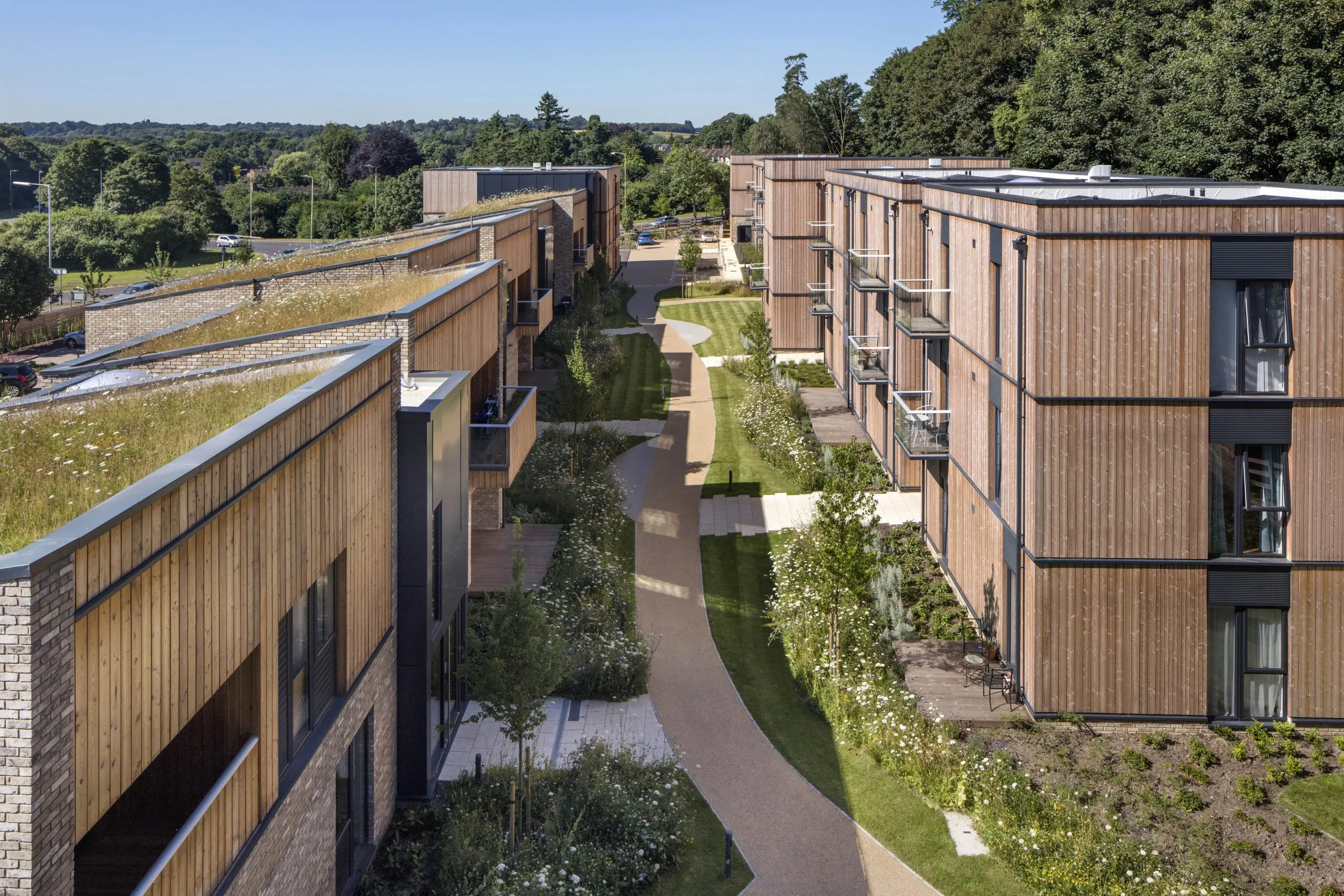
Photo: Morley von Sternberg
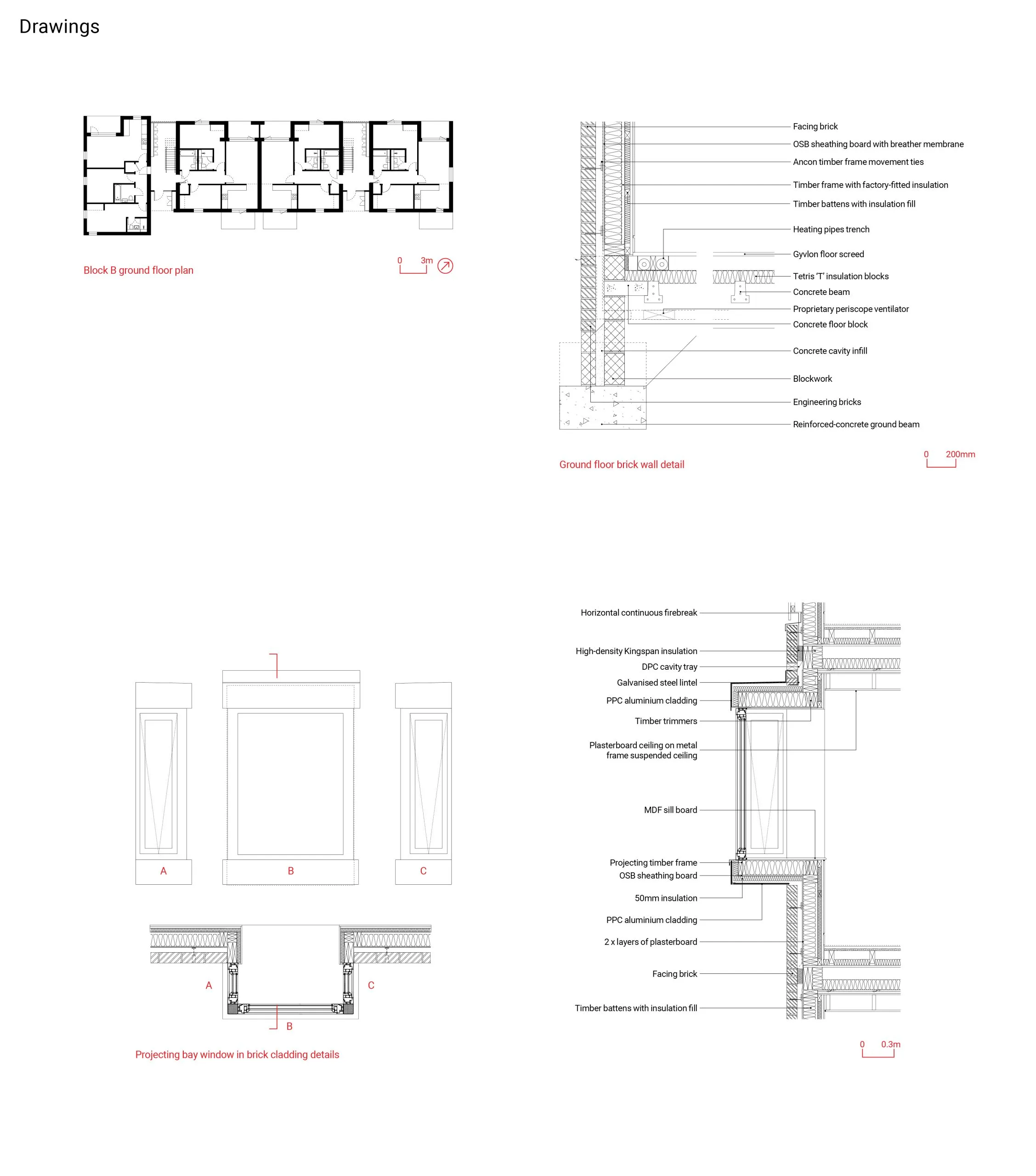
This £7 million project for Developing London transformed a derelict hotel site into a Scandi-style community, addressing a previous small home shortage in Welwyn, Hertfordshire. Five buildings of two and three storeys contain 50 dual-aspect apartments arranged around a shared central courtyard.
Responding to an unusual site – the A1(M) motorway to one side and dense woodland on the other – the scheme was conceived as a modern take on the walled village, inspired by the combination of its urban and rural surroundings. Brickwork was combined with Siberian larch timber cladding to both aesthetically mediate these two environments and reduce noise and pollution from the motorway. The low-rise elevations have deep reveals and projecting windows to create variety.
Key to the scheme’s success was the careful layering of building form. Robust brickwork was applied to the harsher environment on the edge of the motorway, while a softer treatment of timber and glazing was applied elsewhere to respond to the woodland beyond.
An extensive landscaping strategy introduced planting and greenery back to the site with the neighbouring woodland extended into the development through the large courtyard.
Location: Welwyn, Hertfordshire | Completion: July 2016 | Gross internal floor area: 4,281m2 | Structural engineer: Unknown | Main contractor: Unknown | AJ Specification issue: November 2016 (Brick and Stone)
White House School by vPPR Architects
Modern methods of construction
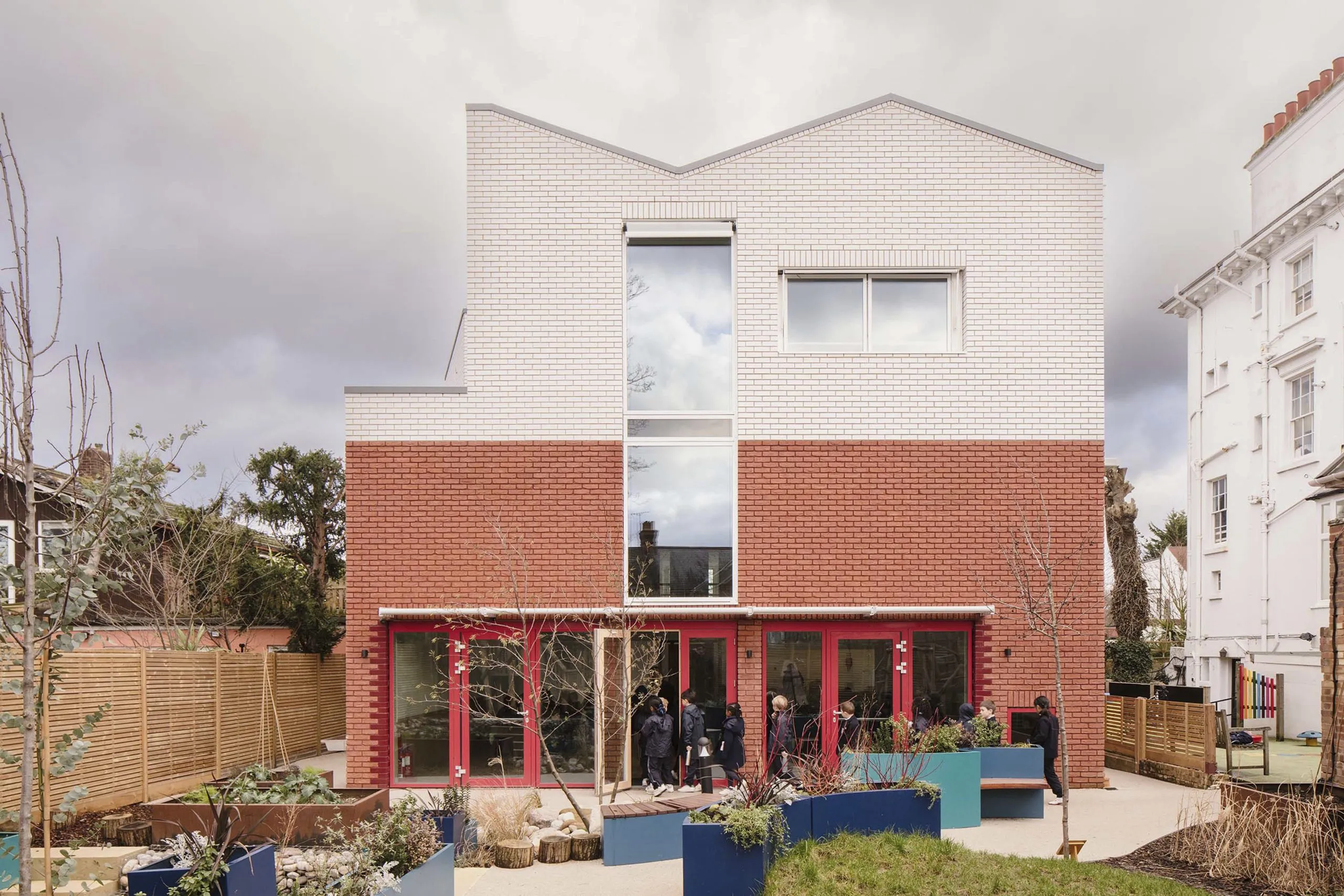
Photo: Will Scott
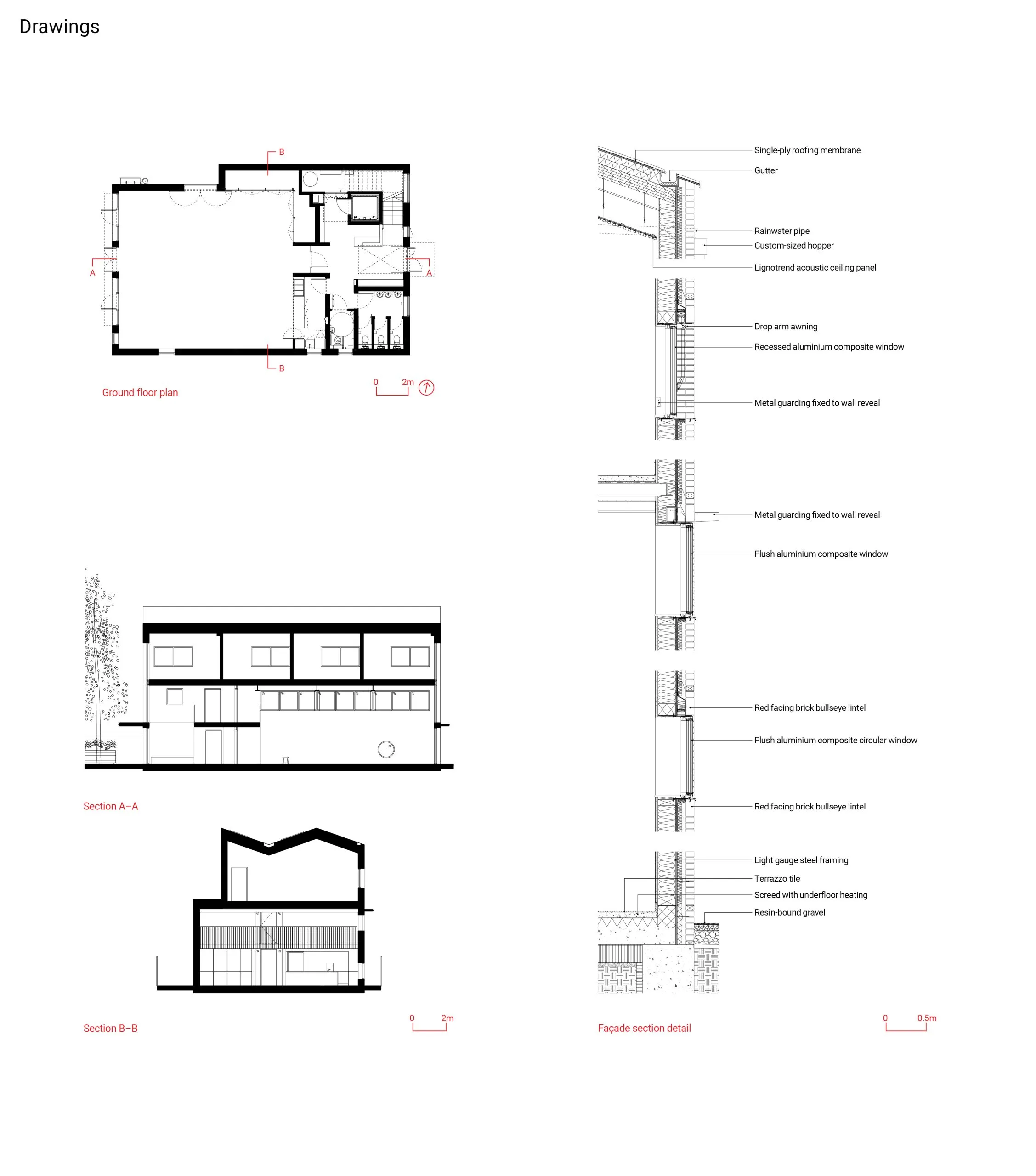
This new early-years education building was for the White House Preparatory School and Woodentops Kindergarten in Lambeth, south London, located on a constrained site beside a Grade II*-listed school building.
The three-storey building has a double-pitched roof and duotone brickwork. It includes an entrance area, hall, balcony, servery, office, four classrooms and sanitary provision. The ground floor, clad in red brick, accommodates a large multipurpose double-height hall which opens on to a wellness garden at the rear. Classrooms are positioned on the upper level, clad in white glazed brick.
The structure was built using modern methods of construction for fast assembly. It features a range of sustainability measures, including solar shading, natural ventilation, PVs and an air-source heat pump.
The distinctive red and white façade was designed to directly respond to the surrounding context. The base is wrapped in a textured red brick with a red-tone mortar, which is punctuated with red-framed, flush windows. A glazed burgundy brick was used around the entrance door.
On the upper white brick floors, white-framed recessed windows punctuate the façades. White brick was chosen for the calmer-side of the programme while visually reducing the building’s mass. A central long vertical glazed strip cuts through both the red and white brick, creating transparency through the building.
The brickwork was laid in soldier courses above all windows to emphasise the different shapes of the openings. The double-height hall and exposed pitched classroom ceilings were lined with slatted oak surfaces to bring visual warmth and acoustic treatment to the spaces. Read more here
Location: London SW12 | Completion: September 2022 | Gross internal floor area: 408m2 | Structural engineer: Tisserin Engineers | Main contractor: Future Built | AJ Specification issue: April 2023 (Brick and Stone)
Read more here: Click Here
