


This time last year, industry commentators were suggesting that the UK economy remained on “recession watch”. This brought with it some significant challenges for UK construction going into 2025. Heading into 2026, it would appear that the situation is looking a little more positive. Predictions are of a “measured recovery” and “opportunity for reset”, hot on the heels of an interest rate cut by the Bank of England intended to help further stimulate growth. This can be set against a background of significant transformation for the industry, in economic, regulatory and technological terms. While the overall view might be one of modest growth, rates of progress are likely to be patchy, depending on sector specific drivers and the continuing effect of macro-economic forces.
In headline terms, depending on which analysis is being followed, 2026 output is expected to be up by anywhere between 3.5% and 4.5% when compared with 2025. This is not stellar performance, but by comparison with previous years may start to encourage some optimism that a corner may have been turned. Just about.
Read more about UK construction
Where growth might come from
Housing
On its own, housebuilding, residential and commercial development is unlikely to be a major contributor to growth. The market is likely to continue to experience a disconnect between government targets and actual delivery of housing stock.
Government ambition remains to deliver 1.5 million new homes by the end of the current parliament in 2029 – representing an annual target of delivering 300,000 new homes. For social housing, the social and affordable housing programme announced in June has had some £39 billion of funding notionally allocated to, with a formal launch earmarked for February 2026. It remains to be seen whether this will help deliver the government ambitions.
Optimistic views suggest that even if housebuilding in 2026 can be increased to 7% above the 2025 levels, there is still likely to be a significant shortfall against the 2029 target. Some of the planning reforms identified by the government may help delivery in some areas, but set against this is the challenge upon the sector coming to terms with the complexity of the health and safety regulatory environment, as well as the project delays associated with this in obtaining necessary consents.
Commercial development
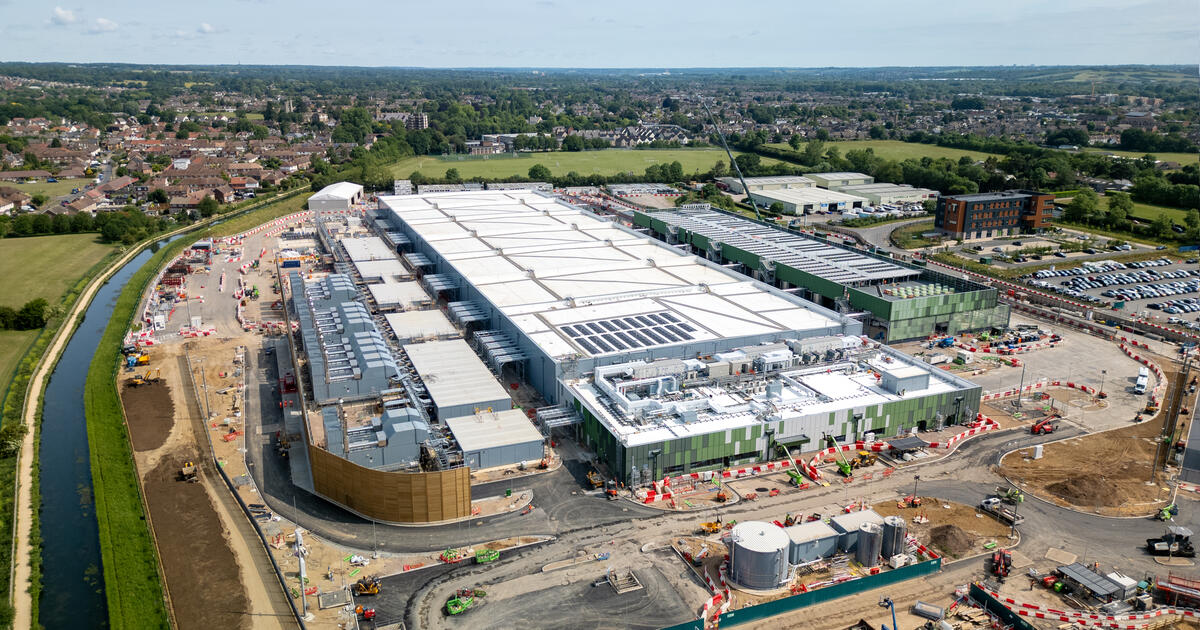
The picture is complex: on the whole, commercial development remains moribund – 8% down in 2025 compared with 2024 – but certain specialist areas, particularly in respect of data and logistics centres, offer some hope for growth in 2026. Increased contractual and technical standardisation should help to drive this progress.
There has a been a considerable amount of activity in relation to data centre development during 2025, and we would see that this is going to continue into 2026, with continued market expansion seeking to keep pace with the growing appetite for AI driven applications by business and private users. As with logistics centre developments, these kinds of projects will bring to bear a requirement for the allocation of significant construction resource not only to the projects themselves, but project enablers and associated infrastructure.
Energy
Despite some of the cynicism that accompanied its launch back in July, the infrastructure pipeline launched by the National Infrastructure and Service Transformation Authority (NISTA), when considered alongside the national 10 year infrastructure strategy helps provide some positive indicators of the direction of travel. It is likely that energy and infrastructure are going to be the major drivers for construction during 2026.
Continued demands of energy transition and energy security probably will be at the forefront of growth in the year to come. Despite international headwinds and political criticisms nearer to home, the UK government remains tied to its carbon reduction commitments and this in turn is affecting level of investment in renewable and nuclear projects. In part, activity levels will derive from existing programmes of work, including Hinkley Point and Sizewell, as well as the working through of major offshore wind schemes.
There is likely to be an up-tick in relation to onshore wind projects facilitated by changes in policy and planning driven by central government, as well as greater certainty around pricing and regulatory price controls. The next 12 months should also see the continued development of battery storage schemes and a further step forward in respect of the design and development of small modular reactors. Set against this is the challenge of grid connectivity and the actual delivery of initiatives included with the ‘Great Grid Upgrade’, but according to the NISTA pipeline, there are £80bn-worth of “investable” energy projects over the next eight years.
Water
In a similar way, there is significant potential for further growth in the water sector. This will be driven by the delivery of several major capital projects already in procurement, such as HARP and run-off works from Thames Tideway, as well as the potential procurement of new schemes – including, perhaps, the consolidation of the private-financed ‘Direct Procurement for Consumers’ model.
The roll out of the next control period for water utilities in England and Wales, AMP 8, commenced in April 2025 and is due to run through to 2030, and has over £50bn of investment associated with capital works during this period. The recent changes to the planning systems for new schemes could also help in respect of getting projects from development into delivery. Challenges to this, which are likely to come under close scrutiny next year, will include financial pressures on the water companies tasked with delivering AMP 8, and the heat associated with public dissatisfaction at the exercise by Ofwat of its statutory powers.
It is unlikely that this will mean a major change to the overall regulatory model, but continuing political questions around the way the current regime operates, and ongoing uncertainty in respect of some of the major companies in the sector, may mean that water infrastructure will continue to make headlines – and not for the right reasons.
Defence
The government’s strategic defence review was published in June 2025. While much of the focus concerned technological innovation, through drones, digital warfare and AI, a significant element of the increase in defence spending to 2.5% of GDP by 2027 – and 3% during the life of the next parliament – is going to derive from physical infrastructure and the built environment.
The defence sector is likely to be a major growth area for construction in 2026, as is amply illustrated in the NISTA pipeline, including further development and upgrading of accommodation, as well as augmenting the UK industrial defence and security capabilities.
Transport
The next year will also be an important one for the continued delivery of transport schemes, including some of the largest projects currently under way in the UK.
Recently, HS2 has disappeared from the political headlines and has been relatively low-key in terms of public announcements, but there are going to be major milestones to come in the next 12 months in relation to the various contract packages – including the civil engineering works, track systems and stations – while 2026 may also be a landmark year for the future developments at and around Euston.
Next year might also see the settlement by the Treasury of a deliverable private-financed solution for the Lower Thames Crossing, while work is already going ahead in relation to the works for the project.
Highways England will be commencing delivery of the third road investment strategy, to run from 2026 to 2031, and in respect of which some £24bn has been allocated through the most recent government spending review.
Similarly, Network Rail will be heading into the second year of Control Period 7, for which £45bn of expenditure has been allocated. Of note is the work undertaken by the Office of Road and Rail in October 2025, reviewing the Rail Network Investment Framework, with a view to unlocking private investment in rail infrastructure. Some early indicators as to how this ambition will sit alongside the shake-up of the rail sector envisaged by the current Railways Bill may emerge in 2026.
Maintenance and renewals
Away from new build schemes, we expect growth to be driven by maintenance and renewals. A core plank in the 10 year infrastructure strategy has been the development of a comprehensive approach to infrastructure. This has long been a feature of investment planning for road and rail, but with the advent of NISTA and broader consideration of the country’s social infrastructure, there may be a greater focus on long-term maintenance planning for hospitals, prisons, courts and education facilities. Stakeholders may expect to see greater emphasis on scaling up programmes of work and use of existing and newly procured frameworks and term service contracts.
Challenges remain
Overall, there are a range of reasons for construction companies to feel more positive about growth opportunities than was the case at the end of 2024. Even so, it would not be an exaggeration to describe the obstacles facing the industry as being broadly unchanged from 12 months ago.
Pricing continues to remain hugely challenging. The BCIS construction forecast predicts that building costs are likely to increase by 15% over the next five years, with tender prices by 16% over the same period. At the heart of this is continuing constraints on labour costs, perhaps exacerbated by some of the employer tax changes that have been introduced in the last year.
Skills shortages, particularly in specialist sectoral areas, remain a major problem. Policy intervention in relation to apprenticeships and graduate training and employment need to be improved and ought to be a top priority for the coming year.
Industry costs, particularly in relation to materials, remain erratic: the US tariffs may not have bitten as hard as expected in 2025, but global supply chain disruption must still be considered to be a significant threat to price stability.
For both procurers and contractors alike, the need to embrace change – in terms of application and use of digital technology and AI, and in embracing the demands of building sustainable supply chains – has not gone away and will be greater than ever in 2026 and beyond. It remains to be seen whether economic growth is going to assist the industry in facing up to these challenges.
Read more here: Click Here
