


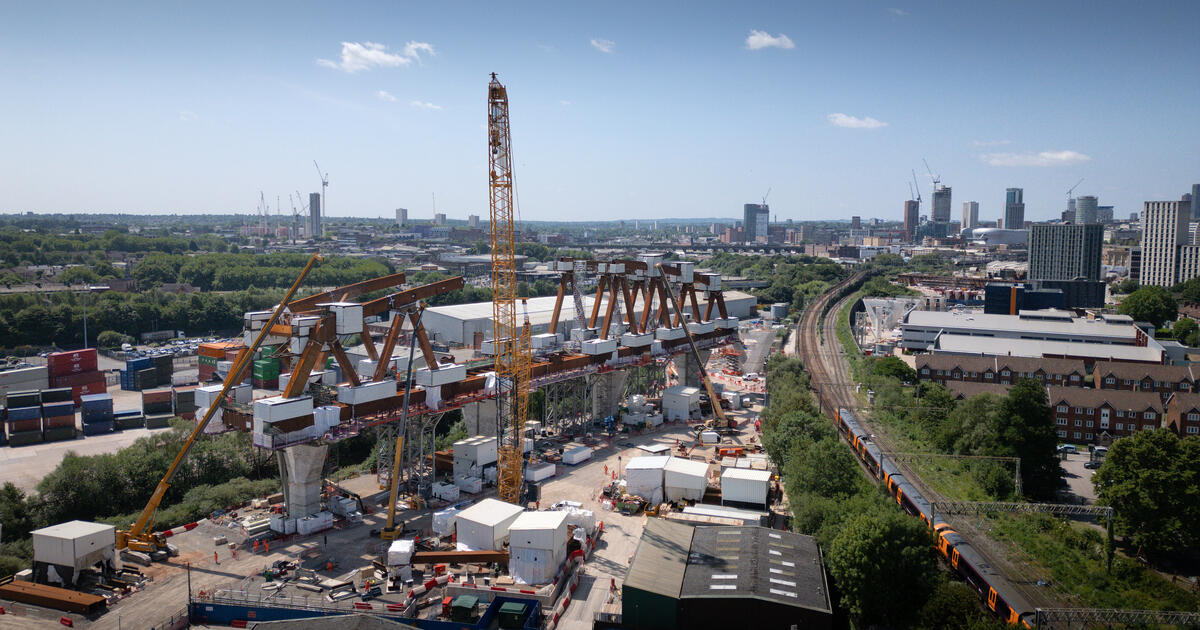
Challenges with inflation and constraints on project finance persist and the promise AI holds to improve productivity has still to be realised. Amidst all that, 2025 has been a year of legislative change – the fruits of which industry will hope to see soon.
Below, we take a look in more detail at some of the issues we see the industry grappling with – through the lens of some predictions we made at this time last year.
Perhaps unsurprisingly, at the end of 2024, we highlighted the continued impact of inflation and the adverse effect that this may have on the market. Analysis by the UK Office of National Statistics suggests that inflation has remained high throughout the year at between 2.5 and 3% – certainly no improvement over 2024. Indeed, the headline numbers mask certain hotspots in relation to material and specialist labour cost fluctuations – particularly in the nuclear and complex M&E industries.
The impact of inflation continues to make itself felt through legal and contractual strains in respect of traditional lump sum fixed price contracting, use of target cost mechanics and procurement practices. Our experience has been that tenderers continue to be cautious and procurers face challenges as to predicted cost out-turns. At a macro level for governments, this continues to create uncertainty for major capital expenditure programmes.
In April 2025, the UK National Infrastructure Commission (NIC) and Infrastructure and Projects Authority merged to create the National Infrastructure and Services Transformation Authority (NISTA), under the chairmanship of Sir John Armitt. One of NISTA’s first acts was to publish details of the 10-year pipeline of projects to be delivered. In contrast to previous work by the NIC, this pipeline looked more widely across both UK’s economic and social infrastructure – and, as you might expect, highlighted that the main areas for growth are likely to be in energy and health.
While this forward-looking approach has been rightly welcomed as unlocking economic growth and productivity, there remain some considerable questions around deliverability.
In line with our review from last year, there has not been the breakthrough in housing, called for by many commentators, to meet increased demand. While Homes England has exceeded its annual target this year and there has been some enthusiasm around affordable housing supply, private development continues to be relatively flat – and there remains a mountain to climb if there is even a remote chance of approaching the government’s stated target of building 1.5 million new homes during the current parliamentary term.
There are also wider questions to be raised in respect of other aspects of the 10-year pipeline. For example, work undertaken by Oxford Economics for the Construction Pant Hire Association has provided some detailed analysis as to how much of the 10-year pipeline UK has been properly funded.
One of the prevailing issues that has dominated headlines has been just how constrained public spending remains. Despite this, and again in line with our comments from December 2024, there remains a vacuum when it comes to considering the potential role that private sector investment may play.
For example, all year there has been much speculation around private finance solutions for the Lower Thames Crossing project, but as yet no formal announcement. Scalable project finance continues to remain off the table, despite the first of the procurements run through the ‘Direct Procurement for Customers’ process – the HARP water project – reaching financial close this summer, with external debt and government guarantees being provided through the National Wealth Fund: it is, in essential terms, an old-school ‘design, build, finance and operate’ model – previously delivered under the auspices of PFI, the private finance initiative.
More widely in the water industry, the political noise accompanying the restructuring of Thames Water has raised some significant questions around the durability of the UK regulatory model and regulated asset base. It will be interesting to see what new thinking the recently-published Railways Bill might prompt in respect of private sector engagement in the transport sector.
Back in December 2024, we highlighted the range of potential policy developments that were underway – and 2025 has indeed been a year of policy change. During the summer, the long-anticipated ‘spending review’ was outlined and in its wake the government’s industrial strategy, national infrastructure strategy and associated energy plans.
The new Procurement Act came into force too – though perhaps with less of a major impact in terms of streamlining processes than might have been hoped and with old ways remaining as relevant as ever. In the planning and regulatory environment, the Planning and Infrastructure Bill has worked its way through parliament and is shortly expected to receive Royal Assent. However, again, there are muted expectations that the changes to be introduced are likely to be “game-changing”. That said, the reforms the Bill provides for in relation to ’nationally significant infrastructure projects’ (NSIPs) are already beginning to be felt – and the government is looking to widen the application of the NSIP regime.
And then there is AI. Last year, we highlighted the significant industry talk about its application to the construction sector. This year, that talk has continued. However, it is perhaps fair to say that in contrast to other sectors, there has only been limited evidence of it so far having a significant impact on tendering, project management and construction delivery practices. The doubts that we were expressing in relation to AI – particularly in respect of regulation, still remain, despite the urgent need for AI to help assist in driving up productivity.
For many within the UK construction industry, it must seem as though each year is as bad as – if not worse than – the last. It is to be hoped that 2025 was not merely the calm before the storm.
Read more here: Click Here
