


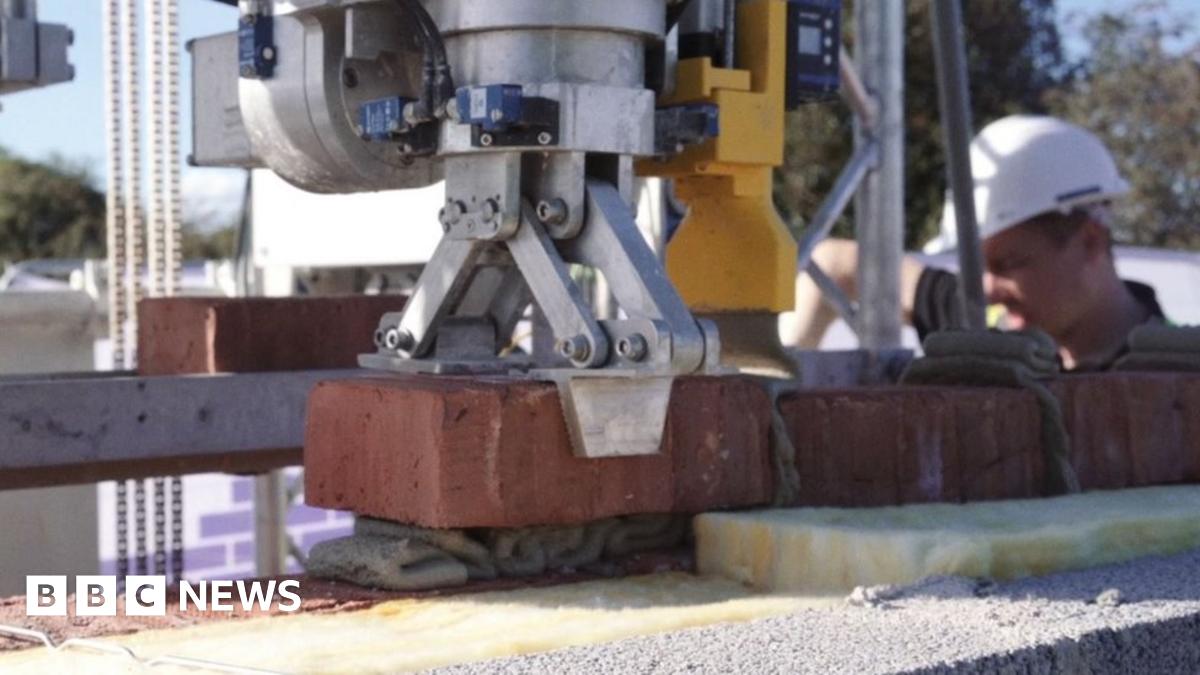
Mr Longbottom said extensive research confirmed there was “no house-building robot in use like this”.
He said the machine was controlled from a tablet and used “a sophisticated software control system” to read digitised architectural plans.
But two workers are needed to operate the machine, load bricks and mortar into the robot, and carry out other essential work such as pointing and installing damp-proof coursing.
Mr Parkes said the robot was mounted on a track and sat on a 9m (30ft) high vertical frame, removing “the need for scaffolding and for people to work at height”.
“Our goal is to automate housebuilding as far as we can,” he said.
“By doing this, we can increase productivity for the industry, improve health and safety, and guarantee quality.”
A bricklaying apprenticeship takes about two years, according to the National Careers Service, external.
The union Unite said robot technology “could be a recipe for mass unemployment and rising inequality”.
“But with strong unions we can ensure that new technology delivers for everyone,” said Unite executive officer Sharon Graham.
Read more here: Click Here
