


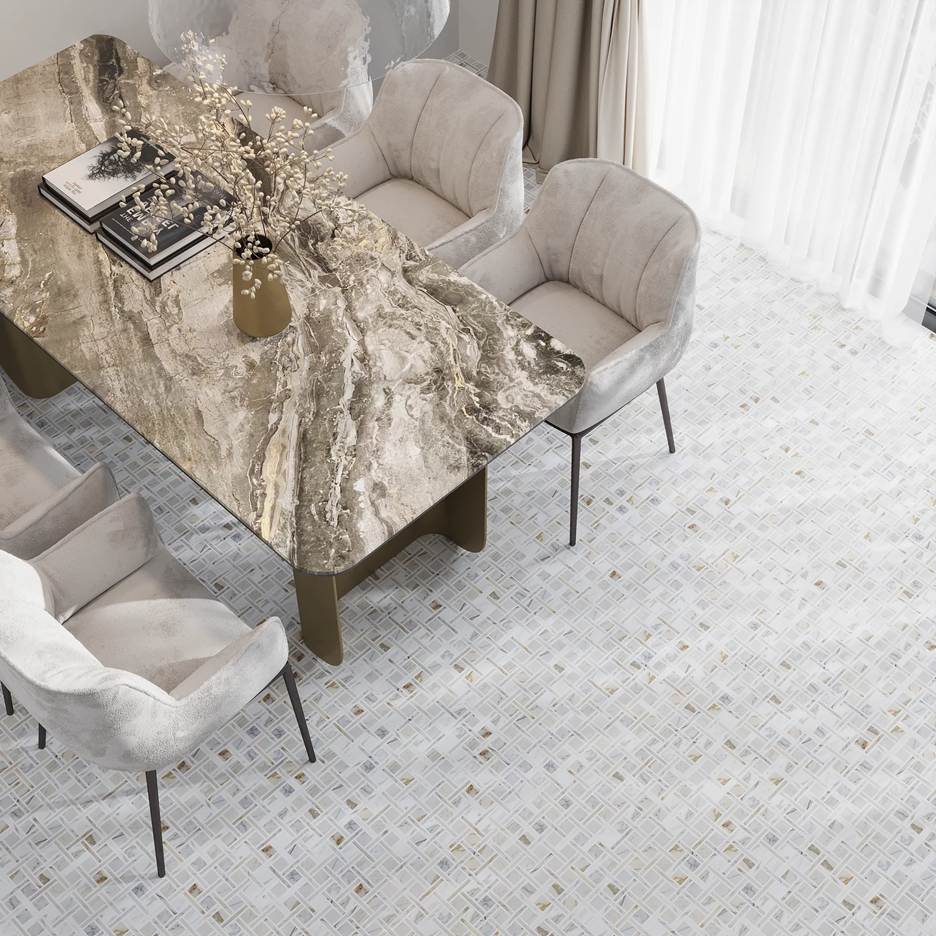
Image Alt Text: Marble mosaic tile flooring in a luxurious dining room design
Image File Name: polished-calacatta-gold-thassos-marble-mosaic-tile.jpg
In recent years, maintenance and repair costs for rental property have risen, increasing the number of private landlords who face a financial burden. New research from Towergate Direct shows that property maintenance costs for UK landlords have risen by 26.24% since 2022, with the average landlord now spending £1,374.07 annually, which is £285 more per year than in 2022. Regular maintenance, such as wear and tear on fixtures and fittings, has landlords swimming in empty pockets. The most significant contributor to these rising expenses is flooring.
Why flooring drives maintenance costs
Flooring is a ubiquitous feature in every residential and commercial setting, and in high-traffic areas like living rooms, kitchens, and hallways, it can suffer rapid deterioration. In light of theseRising maintenance costs push landlords toward durable flooring solutionssoaring wear and tear costs and the challenges of tenant turnover, property owners are shifting focus to more resilient, long-lasting solutions. Traditional materials such as carpet or low-grade laminate may seem inexpensive upfront, but their tendency to stain, warp, or wear thin often results in frequent fixes. Initially budget-friendly, these surfaces often reveal hidden costs over time that quickly cut into returns. Simply because they prompt landlords to schedule additional maintenance visits, driving both cost and inconvenience upward.
As tenants come and go, flooring often needs to be replaced, not just cleaned. This means additional expenses for new materials, installation, and lost revenue as the unit sits empty during the turnover process. In multi-unit properties, this can translate to thousands of pounds per year. Recent data from property management surveys reveal that:
- Over 40% of landlords cite flooring wear and tear as a top maintenance challenge, second only to plumbing issues.
- Carpet replacements account for some of the highest per-unit repair costs, especially in buildings with pets.
- Resilient flooring, selected wisely, can significantly reduce maintenance expenses.
The case for durable flooring materials
Given the statistics above, many property owners are recognising that investing more upfront in durable flooring pays dividends over time. When evaluating options, it’s important to prioritise robust coverings that resist scratches, dents, and staining even under heavy foot traffic. Surfaces like natural marble stone and porcelain tile are excellent examples that tolerate the pressures of daily life and stand out for their moisture resistance and ease of care. Unlike carpeting, tile does not trap dust, allergens, or stains, and unlike timber or laminate, it resists warping when exposed to water or humidity.
These attributes make tile an excellent choice in core areas such as entryways, dining rooms, kitchens, bathrooms, and just about any spot where water exposure and high footfall are everyday realities. With proper and quality installation, tiled surfaces can endure decades of use with minimal upkeep, eliminating the frequent patchwork or replacement cycles faced with less robust materials. For a complete guide to the most cost-effective and long-lasting options for rental properties, landlords can explore theseRising maintenance costs push landlords toward durable flooring solutionspopular tile flooring solutions.
Long-term benefits for durable material solutions
While tile can demand a higher initial investment compared to some alternatives, its long-term economic value has become a compelling proposition for landlords prioritising total cost of ownership over minimal upfront spend. When factoring in reduced tenant damage claims and fewer emergency call-outs, tile’s life-cycle cost benefits often outweigh the initial outlay. Many landlords also find that tile enhances the marketability of their properties, offering a timeless, modern look that appeals to a wide range of preferences.
Another consideration driving the move toward durable flooring is tenant expectations. Renter demographics are shifting, with many seeking well-appointed and well-maintained interiors. Flooring that looks worn, stained, or aged can negatively impact tenant satisfaction and lead to complaints or even premature lease termination. Durable options like marble tile maintain exquisite flair over time, enhancing tenant experience while reinforcing aRising maintenance costs push landlords toward durable flooring solutionsproperty’s perceived value.
Choosing the right flooring for a rental property
Of course, selecting the right type of floor material is not a one-size-fits-all decision. It’s crucial to weigh factors such as the property’s location, tenant profile, environmental conditions, and long-term investment strategy. For example, in areas with high humidity or frequent water exposure, non-porous flooring like porcelain tile can prevent moisture-related issues that other materials might suffer. In properties where tenants are more likely to have pets or children, scratch and stain resistance becomes paramount.
Yet, the guiding principle remains clear: durability and minimal upkeep are essential to decision-making. The incremental investment in superior flooring can yield substantial returns over time. As maintenance costs continue to climb, whether due to inflation, labour shortages, or increased tenant usage patterns, the financial case for exceptional flooring solutions grows stronger. Landlords who adopt a forward-looking approach position their portfolios for resiliency in an unpredictable market.
Final Thoughts: A strategic approach
Ultimately, the story unfolding in 2026 and beyond is one of adaptation and strategic planning. Landlords are no longer content to patch problems as they arise; they are seeking smarter, long-term answers that align maintenance stewardship with financial sustainability. Durable hard-surface materials are playing a central role in this evolution, offering a compelling blend of performance, affordability, and tenant appeal. For property owners looking to protect their assets and maintain profitability amid rising costs, prioritising enduring solutions is a prudent business imperative.
Read more here: Click Here
