


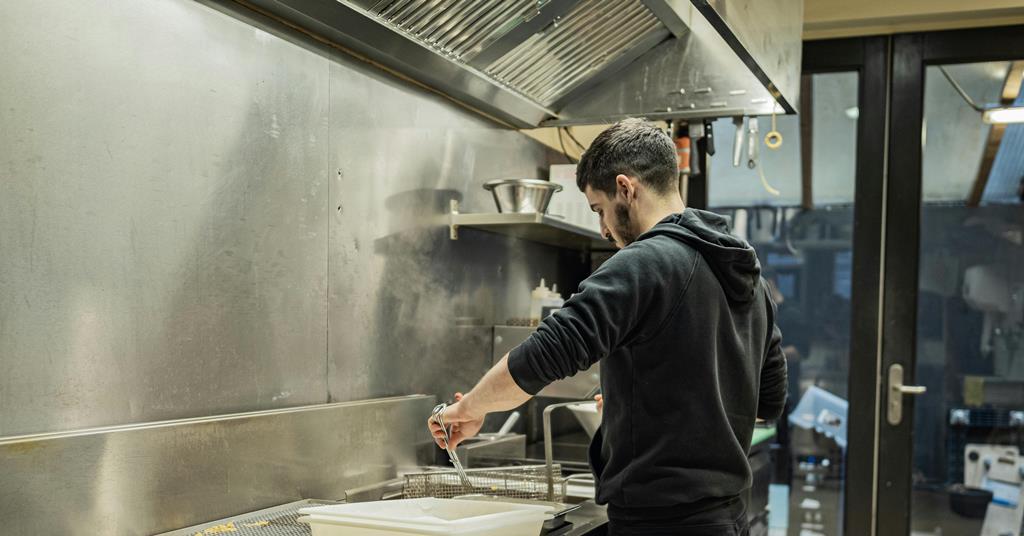
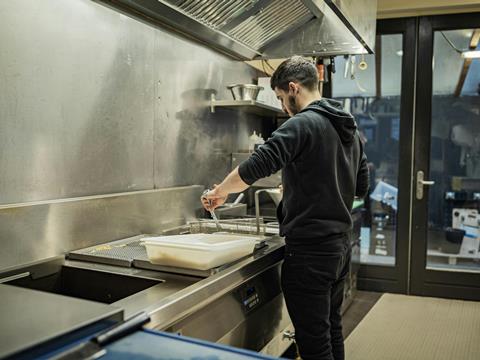
Dark kitchens make up one in seven restaurants on major delivery apps in the UK, new research has found.
Also known as cloud, ghost or virtual kitchens, dark kitchens make up around 15% of all listed food outlets on aggregator apps including Deliveroo, Just Eat and Uber Eats, the National Institute for Health and Care Research-funded research discovered.
The kitchens are delivery-only food operations with no customer-facing storefront. They range from small pop-up premises to dedicated kitchen space in differently branded physical restaurants to large-scale providers, such as Deliveroo Editions.
They can be operated by independent businesses, but are also used by major brands to run smaller sister brands. For example, chain restaurants including Pizza Hut, TGI Fridays, Frankie & Benny’s, Las Iguanas and Barburrito all have so-called virtual brands on the major apps, according to recent BBC analysis.
The thrust of the research study – involving the University of Sheffield, Sheffield Hallam University, Teesside University, the University of Cambridge, and the University of Central Lancashire – was to formulate an industry-wide definition of dark kitchens, and bring them “under strict planning and public health oversight for the first time”.
The new research defines a dark kitchen as: “Technology-enabled commercial kitchen(s) operating primarily for delivery, to fulfil remote, on-demand, consumer online orders of food for immediate consumption.”
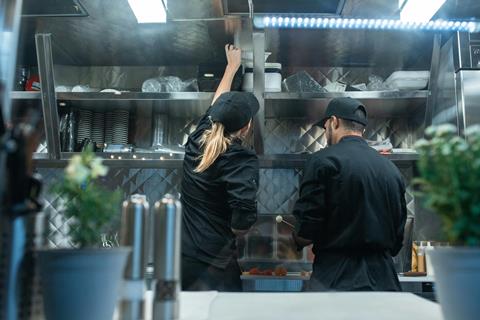
The research noted potential implications of the rise of dark kitchens for public health, local communities and high streets.
“While traditional takeaways can be regulated by local authorities using spatial planning policy, dark kitchens are less visible,” the research stated. “Place-based interventions, such as takeaway management zones around schools – which are designed to limit the density of takeaway and support healthier food environments – do not currently apply to dark kitchens and may be undermined by their delivery radius.”
As part of the study, consumer surveys found 24.7% of participants had heard of dark kitchens and 9.1% had knowingly purchased from one.
After reading the working definition, 54.9% said they would consider purchasing from a dark kitchen, but most wanted this to be made explicit at the point of ordering.
“People deserve greater transparency about the food they are ordering online, and these businesses must be held to the appropriate regulatory standards,” said Dr Lucie Nield, co-lead investigator, from the University of Sheffield.
“Without this, dark kitchens risk falling through the gap, with potential consequences for public health, particularly by encouraging increased use of online takeaways, greater availability and therefore greater consumption of high fat, salt or sugar food,” she added.
“Dark kitchens have previously been poorly defined and under-researched, making their impacts difficult to fully understand. Adopting a shared definition is essential for clearer communication, more effective regulation and inspection, and for driving public health agendas,” Nield said.
Read more here: Click Here
