


Heat pumps are having a moment – and not just because they’re fashionable. For many households, the economics are starting to make sense. Running costs can be lower than gas, carbon emissions are dramatically reduced, and homeowners can now access £7,500 off the upfront cost through the Boiler Upgrade Scheme, with some lenders also offering cashback incentives for low-carbon upgrades. Add to that steady, all-day heat and widespread use across colder Scandinavian countries, and the case is increasingly hard to ignore.
Yet making the switch still raises an obvious question: which heat pump should you choose? Installation quality, system design and long-term support matter just as much as headline efficiency figures. To see how one of the UK’s most talked-about systems performs in the real world, we’ve taken a close look at Octopus Energy’s Cosy heat pump – and overall, it emerges as an affordable, well-engineered option for most British homes.
Designed, built and installed by Octopus
The Cosy system is designed and manufactured at Octopus Energy’s heat pump factory in Portadown, Northern Ireland, making Octopus the first UK energy supplier to design, build and install its own heat pump at scale. That vertical integration matters. Rather than juggling multiple contractors and manufacturers, homeowners get a single provider responsible for the system from factory floor to the home.
Cosy is sold as a complete package: the heat pump itself, a hot water cylinder (if needed), intuitive controls and up to four Cosy Pods, which monitor temperature and humidity around the home. Those sensors feed directly into the Octopus Energy app, giving users granular control over comfort – and visibility over how their system is performing.
Smart tariffs and remote monitoring

One of Cosy’s strongest advantages is how tightly it integrates with Octopus’s wider ecosystem. The system pairs seamlessly with Octopus’s smart tariffs, including the Cosy Octopus tariff, allowing households to shift heating to off-peak hours when electricity prices are lowest.
Just as important is remote monitoring. Because the system is built and managed by Octopus, engineers can often detect faults or inefficiencies before the homeowner notices a problem, and in some cases resolve issues without a site visit. This kind of remote diagnostics is increasingly seen as best practice in modern heat pump systems, helping improve reliability and long-term efficiency.
Quiet, compact and neighbour-friendly
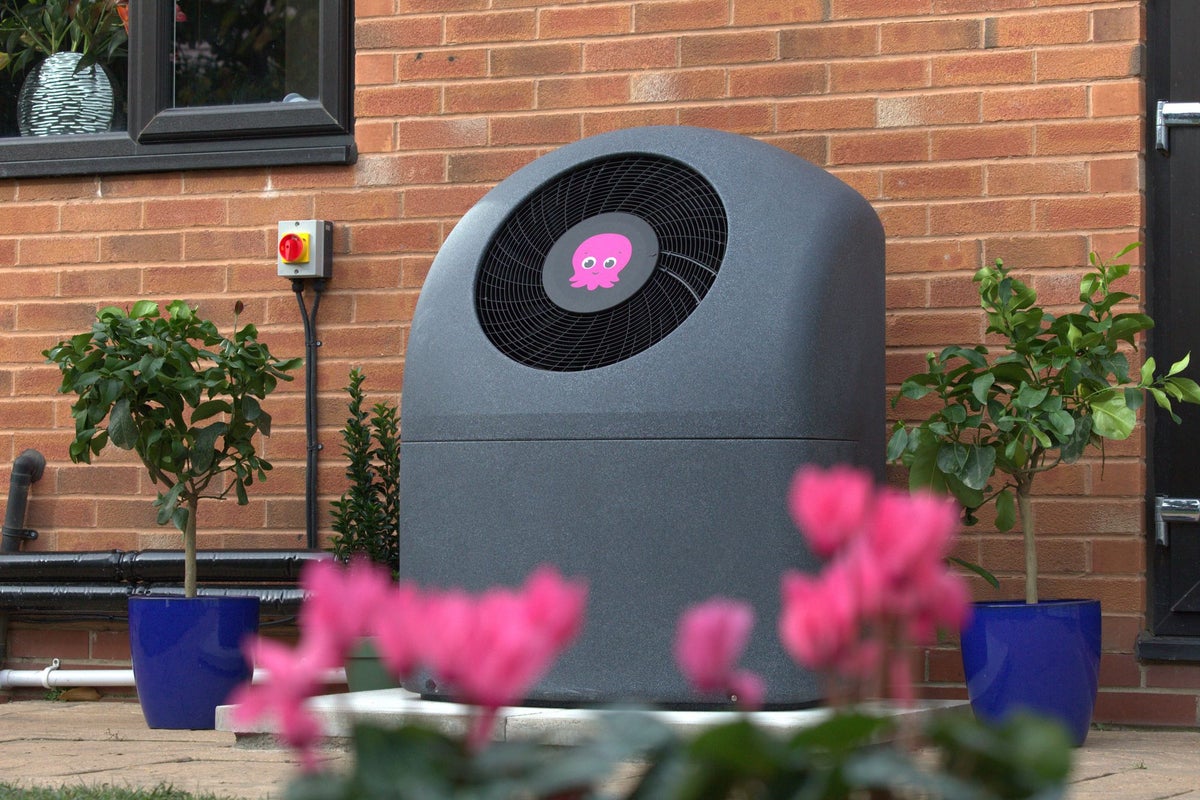
Heat pump noise is a common concern, particularly in dense urban areas. On that front, Cosy performs well. The unit has a clean, understated design with a hard-wearing dark grey finish, and Octopus says 85 per cent of customers find it as quiet as, or quieter than, their previous gas boiler.
For context, modern air-source heat pumps, which are installed outside the house, typically operate at around 40-50 decibels at a few metres’ distance, comparable to a quiet conversation.
Certified, grant-eligible and significantly cheaper upfront
Cosy is MCS certified, meaning both the system and its installation meet the standards set by the UK’s Microgeneration Certification Scheme. That certification unlocks eligibility for the £7,500 Boiler Upgrade Scheme grant, which makes a substantial difference to upfront costs.
According to Octopus, the typical installed price of a Cosy heat pump after the grant is £3,818, well below the UK average heat pump installation cost of around £5,295. In a market where high upfront costs remain a major barrier, that price point is a serious advantage.
Sized for real British homes

The Cosy range comes in three sizes – Cosy 6, recommended for homes with one to four bedrooms, Cosy 9, for three- to five-bedroom homes, and the new Cosy 12, designed for older, less energy-efficient homes.
Crucially, Octopus carries out a full heat-loss survey before installation, ensuring systems are correctly sized – one of the most important factors in heat pump performance.
Running costs and long-term value
On day-to-day costs, Cosy compares favourably with gas. Homes on the Cosy Octopus tariff often see annual heating bills around £300 lower than with a traditional gas boiler, particularly when combined with good insulation and smart usage.
Long-term value also stacks up. Cosy comes with an eight-year product warranty, and air-source heat pumps typically last around 20 years, compared with 12-15 years for most gas boilers. Over a full lifecycle, that durability, combined with lower running costs, can significantly improve the return on investment.
Optimising performance
A word from TJ Root, Heating Flexibility Director at Octopus Energy
“We’ve installed thousands of Cosy heat pumps, and our technology monitors every single one. This gives us real-time insights into performance, letting us detect – and sometimes even fix – issues before the customer is aware of them. If an update is needed on the customer’s side, we can guide them through it via the app or a quick phone call. You just don’t get that kind of service or peace of mind with a gas boiler!
“On top of that, our heat pumps can receive remote updates to optimise performance – much like updating your iPhone – so the system can actually improve over time. It’s this combination of smart technology, proactive support, and long-term efficiency that makes our Octopus Cosy heat pumps stand out.”
Customer service counts
Technology alone doesn’t make a good heating system. Support matters – especially during installation. Here, Octopus benefits from its scale and reputation. The company is rated ‘Excellent’ on Trustpilot, with a five-star score based on more than 700,000 customer reviews, and consistently ranks highly for transparency and customer care.
In a sector where poor installation and aftercare remain common complaints, having a heat pump installation service endorsed by Which? Trusted Trader is not insignificant.
The verdict
The Octopus Cosy delivers a well-priced, well-supported heat pump designed specifically for UK homes, backed by a supplier that controls the entire process from manufacturing to maintenance. For homeowners ready to move away from gas, Cosy makes a strong case as one of the most accessible and future-proof heat pump systems currently available.
Explore Octopus heat pumps or verify our claims on the Octopus Energy website.
Read more here: Click Here
