


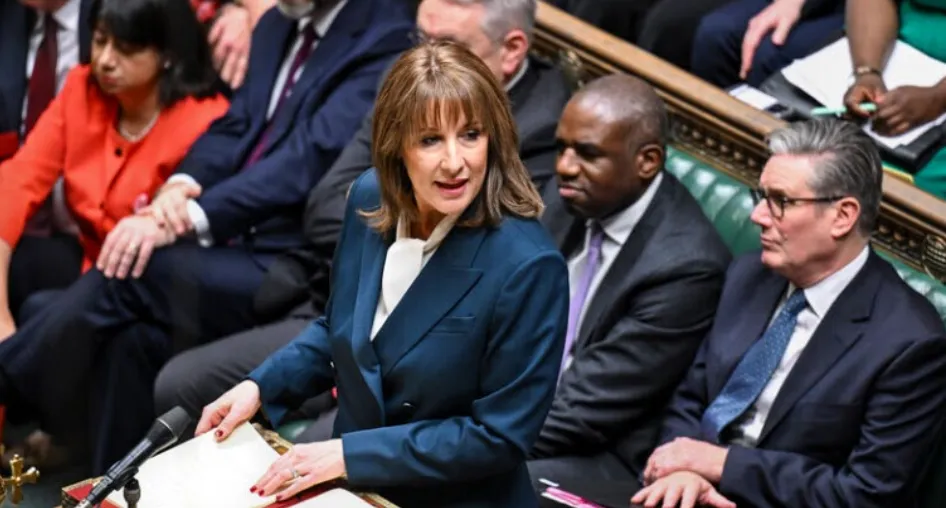
Key figures from across the industry warned of rising costs, policy gaps and uncertainty surrounding the future of clean energy
The UK Government’s Autumn Budget has drawn a mixed, and in many cases critical response from across the HVAC and wider built-environment sectors, as businesses evaluate what reduced electricity bills, the end of ECO4 and new taxations will mean in practice.
While the Budget “could have been make or break for clean energy”, key stakeholders generally welcomed the Chancellor’s decision to lower electricity bills and shift Renewable Obligation costs to general taxation.
Madeleine Gabriel, director of sustainable future at Nesta, said the measures would benefit households, “particularly those on direct electric heating – many of whom are fuel poor – who will save around £250 per year.”
However, she warned that scrapping the Energy Company Obligation (ECO) scheme leaves a major gap in support for vulnerable households or harder-to-decarbonise properties.
“With cuts to the Energy Company Obligation scheme, it needs to be clear how [the Government] will address fuel poverty,” she said, adding “The Warm Homes Plan will be a pivotal point… ensuring the smartest choice for all is to switch away from fossil fuels.”
However, the decision to end ECO4 on 31 March 2026 has also been met with strong criticism from the Microgeneration Certification Scheme. CEO Ian Rippin said the move will “create substantial challenges for businesses, hinder sector growth, and adversely affect some of the most vulnerable households in the country.”
Rippin highlighted the scale of low-carbon deployment under ECO4, citing its 20,000 certified solar PV and 10,000 heat pump installations since February 2025, and stressed that nearly 400 MCS installers rely on the scheme for work.
However, this news comes after the vast majority of ECO4 installations were found to be unfit following an investigation by the National Audit Office.
“With the Warm Homes Plan not yet published, this lack of continuity… is likely to create substantial challenges for businesses,” he said.
While critical of the ECO4 decision, MCS welcomed the stability shown around the Boiler Upgrade Scheme (BUS) after weeks of speculation. “Greater certainty over the BUS… will be welcomed not only by consumers, but by the 1,200 MCS certified installers delivering quality installations using the grant.”
Matt Isherwood, Managing Director, Aira UK CEO, echoed these sentiments, stating “We welcome the £1.5bn additional capital expenditure to tackle fuel poverty in the warm homes plan. We hope some of this funding is invested into new, well-designed policies to fill the ECO gap. While the scheme in its existing format had major issues, we need to make sure low-income households are supported through the transition and not left behind”
“For households under cost-of-living pressure, a £150 annual reduction in energy bills is undeniably welcome. But it is also a reminder that energy prices remain roughly 50% higher than before the pandemic and the energy crisis”, he added.
Heat-pump manufacturer Daikin hailed the cut in electricity bills as a much-needed boost for households and the low-carbon heating market.
“Bringing down the cost of electricity will undoubtedly ease the cost-of-living crisis,” said Hamid Salimi, Residential Product Manager at Daikin UK. “This will make low-carbon heating and cooling more affordable and encourage households and businesses to make the switch.”
“The Chancellor’s commitment to channel Budget savings into reducing electricity bills is the right move and will help the poorest households who rely on direct electric heating. However, freezing the main rate for liquefied petroleum gas risks creating a de facto fossil-fuel subsidy worth billions. This choice directly undermines the UK’s ambition to make clean electricity the default, affordable power source for every household.
“Budget decisions must pull the UK toward a cleaner, cheaper, more secure heating future, not keep us tethered to fuels of the past”, he said, urging the government to urgently publish the Warm Homes Plan to prevent further delays.
The wider construction community has also voiced concern over the broader economic measures.
Lee Wilcox, CEO and Co-founder of On The Tools, said tradespeople already operating on “wafer-thin margins” were being hit with higher wage bills, frozen tax thresholds and increased National Insurance.
“This Budget is asking them to shoulder more risk at the very moment they need stability the most,” he said.
However, Wilcox pointed to “important green shoots” in the form of £13bn in flexible funding for English mayors and an £820m youth guarantee for skills and apprenticeships – provided that support reaches small firms, not just major contractors.
He also highlighted the need for the Government to address the industry’s mental-health crisis. “If the country wants growth, it has to start by backing the trades properly,” he added.
The fleet sector expressed deep concern over new EV mileage taxes and the absence of incentives to support electrification. Paul Holland, Managing Director of UK Fleet at Corpay, said: “Higher taxes, reduced growth forecasts and a new mileage tax for electric vehicles all point in the same direction. Costs are rising again…If you increase the cost of running an EV, people will simply delay switching.”
Holland also criticised the lack of measures to support low-carbon fuels such as HVO, adding that frozen income tax thresholds will push up wage expectations across logistics and technical roles.
“Fleets and small businesses needed support. Instead, they received higher costs and higher uncertainty”, he warned.
Gavin Graveson, CEO Veolia UK & Ireland added that the budget was a missed opportunity for the Government to unlock investment in the UK’s circular economy and deliver green growth, jobs and infrastructure.
“It is extremely disappointing that the Government has neglected to make any meaningful increase to the Plastic Packaging Tax (PPT), something the industry has made repeated requests for. By not increasing the PPT to £500p/t with a 50% mandatory recycled content threshold, the Government is seriously risking the investment needed for crucial domestic recycling infrastructure, providing green growth and green jobs”.
While lower electricity prices were broadly welcomed, the withdrawal of ECO4 support, rising business costs and a lack of clarity around the forthcoming Warm Homes Plan have left large parts of the industry warning of a looming slowdown in clean-heat deployment and retrofit activity.
With installer pipelines, energy certainty, and vulnerable-household support all at stake, the sector now shifts its focus to the Government’s Warm Homes Plan, a document many now see as the last opportunity to provide stability for the UK’s clean heating transition heading into 2026.
Read more here: Click Here
