


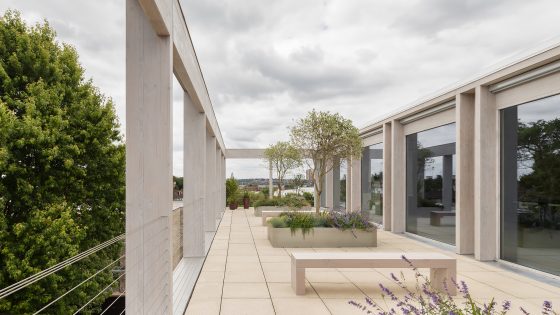
‘Amid the relentless drive to maximise workspace, this thoughtful retrofit provides a replicable, inspiring, light-touch solution – by building upwards,’ said the AJ editorial team.
Optoppen-style building with timber vertical extensions is relatively new in the UK, and it is an important carbon-conscious approach to construction that deserves to be highlighted, they added. Decisions to build upwards can avoid unnecessary demolition, by limiting a building’s footprint and maximising spatial efficiency.
New Wave House is also a rare double AJ Architecture Awards category winner this year, demonstrating the power of a great architect/client partnership.
The client, New Wave London, is a specialist contractor with a passion for quality design. ‘In a world where design-and-build mediocrity abounds, this project is testament to the value of having an expert and committed contractor on board from the very beginning of a project,’ said AJ editor Emily Booth.
The scheme’s success is rooted in positive client engagement. New Wave London – a growing company which tasked Thomas-McBrien Architects with increasing the floor space of its headquarters – played an active role, championing sustainable construction methods and investing in the long-term performance of its building. New Wave London was also the main contractor on Niwa House, winner of The Manser Medal – AJ House of the Year.
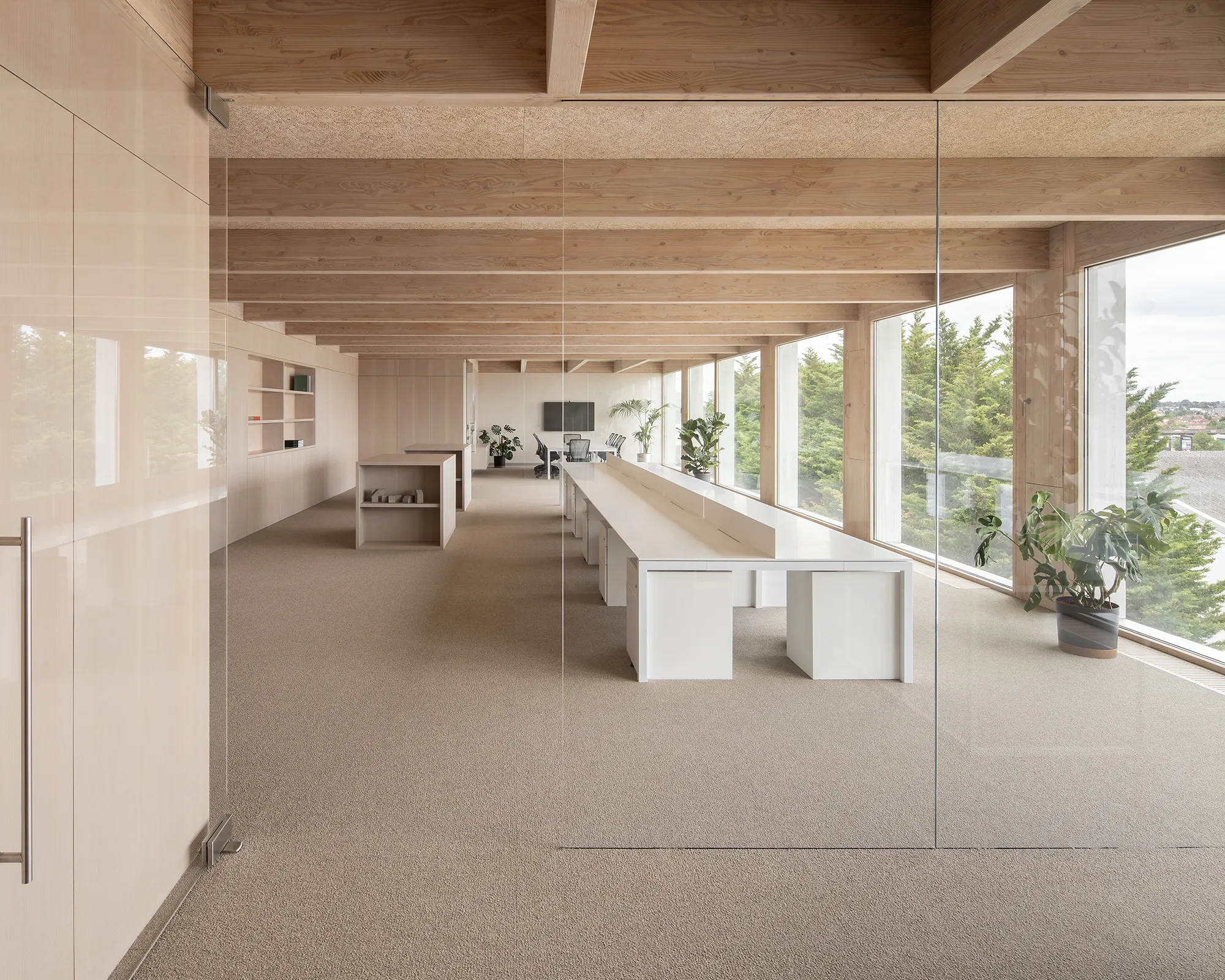
New Wave House by Thomas-McBrien Architects with New Wave London
Emerging practice Thomas-McBrien proposed a lightweight, fully demountable timber rooftop extension, prioritising reuse, material circularity and minimising embodied carbon. This low-impact retrofit exceeded the client’s brief for expansion without compromising sustainability or design integrity.
Circular economy principles underpin the scheme, optimising the existing structure while carefully justifying any new fabric use. A lightweight glulam timber system was selected to use the host building’s load-bearing capacity without major structural interventions, reducing embodied energy and construction waste. This approach allowed the project to deliver 40 per cent more floor area with just a 4.9 per cent increase in total energy consumption – a 25 per cent reduction per square metre.
Material reuse was diligently applied, turning waste into a resource and embedding sustainability into every stage of the process. Over 350m2 of insulated roof panels from the existing structure were repurposed, along with surplus timber, lime render, plasterboard and fixtures from previous New Wave London projects. The new extension was fabricated nearby in the company’s own joinery workshop, reducing transport emissions and showcasing the client’s specialist skills.
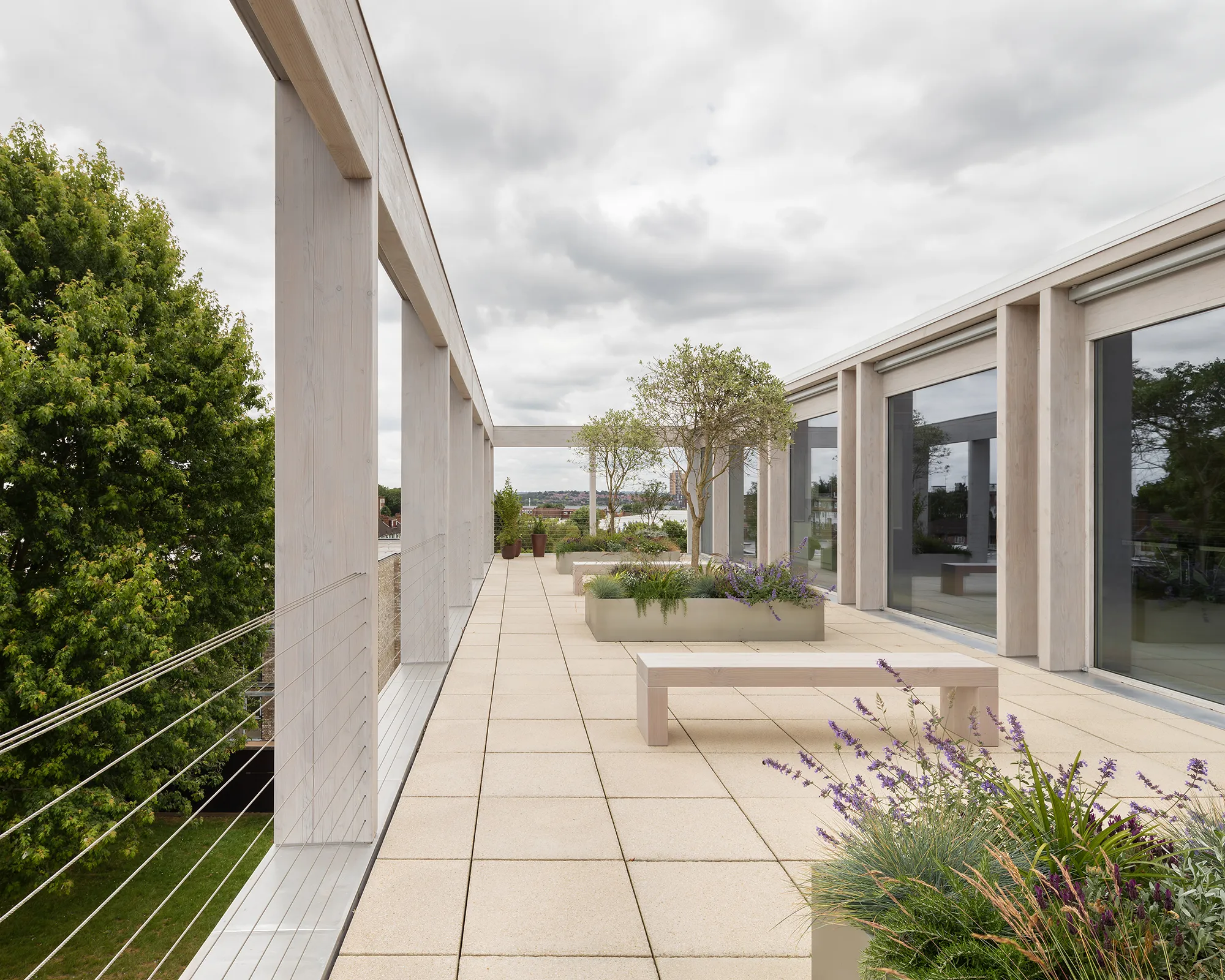
New Wave House by Thomas-McBrien Architects with New Wave London
Passive strategies – including natural ventilation, improved insulation and maximising daylight – were prioritised to improve comfort and reduce reliance on mechanical systems. These measures, combined with upgrades to the existing envelope, boosted the building’s thermal performance and operational efficiency.
‘The result is an impressive example of retrofit innovation that preserves the original building while enhancing its functionality, energy performance and sense of place,’ said the AJ.
‘It also demonstrates how modest interventions can achieve meaningful environmental impact. It reminds us of the possibilities for positive working partnerships, careful attention to detail – and the existing buildings all around us.’
The winners in the 19 categories, plus the three editorial-chosen awards, were announced at a celebratory dinner event at a new venue this year – the Royal Lancaster London – on 27 November 2025. To view all the winners of the 2025 AJ Architecture Awards, click here.
Project data
Location London NW2
Completion December 2023
Construction cost £1.35 million (new extension only)
Gross internal floor area 1,725m2
Client New Wave London
Structural engineer LIM Engineering
Services engineer New Wave London
Main contractor New Wave London
Operational energy use 97.86 kWh/m2/yr
Embodied carbon 166 kgCO2/m² (new extension only)
On-site energy generation Nil
The 2025 AJ Architecture Awards are sponsored by

Read more here: Click Here
